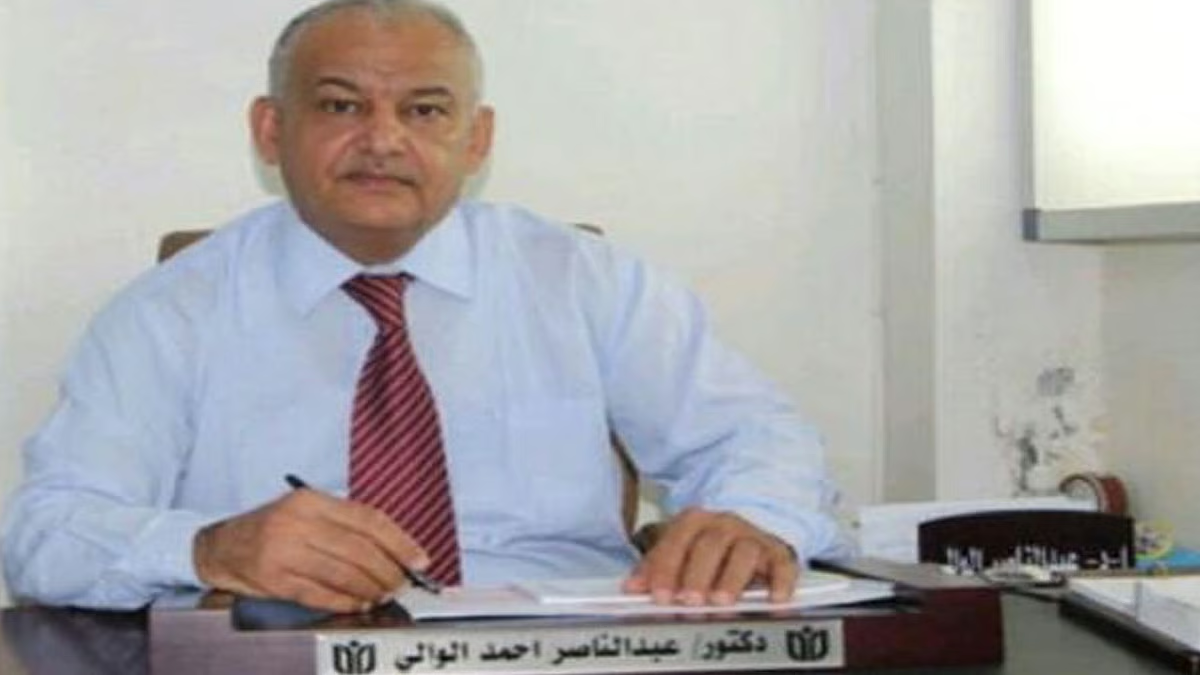
Aden, Yemen – The public questions raised by Dr. Ahmed Abdul Nasser Al-Wali, a member of the Southern Transitional Council’s (STC) Presidency and former minister, have opened a wide door to debate and doubts about the true fate of the STC leadership residing in the Saudi capital, Riyadh. This comes in the wake of rapid developments that led to the announcement of the “dissolution of the council” and the formation of a new Yemeni government that completely excludes STC ministers.
A sudden interruption in communication… what’s going on behind the scenes?
In a poignant testimony, Dr. Al-Wali revealed details of his father’s departure (his father, who held the positions of minister and head of the Southern Transitional Council bloc) to Riyadh at the urgent invitation of the government and with the approval of Major General Aidarus al-Zubaidi. Al-Wali explained that all contact with the delegation was lost immediately upon their arrival at Riyadh airport. This sparked widespread concern among the families of the leaders and the general public in southern Yemen. Discussions began circulating about the possibility of “house arrest” or severe political pressure.
Transitional Council: “Dissolution by free will” or under duress?
These questions cast doubt on the official narrative that the Transitional Council dissolved “of its own volition.” Observers believe that the changing realities on the ground point to different scenarios. First, the loss of official status: members of the delegation who left in leadership capacities suddenly found themselves “without positions” after the formation of the new government. Second, the stalled dialogue: talk of a political dialogue requiring their continued presence in Riyadh has faded. Instead, there is complete ambiguity surrounding the reasons for their continued stay.
Popular demands for transparency before Ramadan
With the approach of the holy month of Ramadan, the governor issued a call for transparency, asserting that the people of southern Yemen have the right to know the outcome of the purported dialogue and the fate of its leaders. The capital, Aden, and the southern governorates are experiencing a state of cautious political anticipation. This comes amidst legitimate questions: Do these leaders still represent the southern cause, or have they become pawns in major political settlements reached under duress?