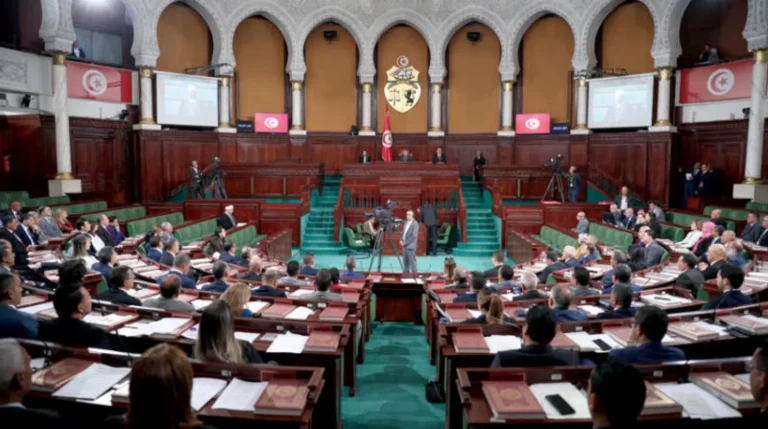
Tunis – Two members of the Tunisian parliament said that security forces arrested MP Ahmed Saïdani on Wednesday. Saïdani, known for his recent emergence as one of President Kais Saied’s most prominent critics, was detained in a move that has raised questions about the reasons for and timing of the arrest.
The two MPs explained that the arrest took place without an immediate official announcement of the legal reasons, while security authorities remained silent regarding the circumstances of the incident. This comes after a series of statements and satirical posts Saïdani published on his Facebook account, in which he directed sharp criticism at President Saied, particularly concerning the government’s handling of the floods and infrastructure crises in several Tunisian regions.
A day before his arrest, Saïdani wrote a satirical post describing the president as the “Supreme Commander of Sanitation and Rainwater Drainage,” referring to what he considered the absence of any tangible achievements in crisis management. He also criticized the president’s reliance on media appearances without practical solutions.
Saïdani is a member of parliament elected at the end of 2022 in elections marked by low voter turnout. These elections followed President Kais Saied’s dissolution of the previous parliament and dismissal of the government in 2021, and his subsequent rule by decree—steps described by Tunisian opposition forces as a coup against the democratic process.
It is worth noting that Saïdani was previously a supporter of the president’s policies against his opponents, before reversing his stance in recent months. He accused Saied of seeking to monopolize political decision-making and blaming others for accumulated failures.
According to Tunisian law, members of parliament enjoy immunity that prevents their arrest for performing their parliamentary duties. However, the law allows for their arrest if they are caught in the act of committing a crime. It remains unclear whether Saïdani’s arrest falls under this legal framework.
This incident comes amidst a tense political climate in Tunisia, where there is growing domestic and international criticism regarding the decline in public freedoms, the persecution of dissenting voices, and the shrinking of the political and media space in the country.