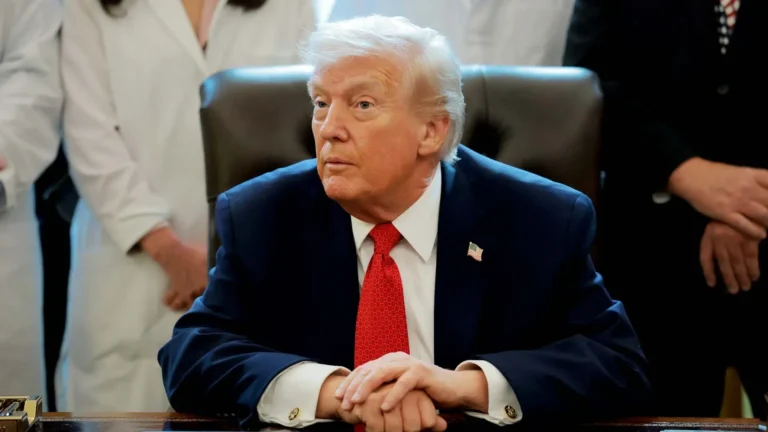
Washington, DC – US President Donald Trump vowed not to back down from his efforts to control Greenland, asserting that this objective is linked, as he described it, to US national and global security. This stance has sparked widespread criticism and concern within Europe, particularly in Denmark and the European Union.
Trump’s remarks came during a press conference on the sidelines of the Davos Economic Forum, where he refused to rule out the use of force to achieve this goal and directed veiled criticism at Washington’s allies. European leaders are struggling to formulate a unified response to his statements. Trump said he had made it clear to everyone that Greenland is “absolutely essential” for global security, adding that there is “no turning back” on this issue.
Washington, DC – US President Donald Trump vowed not to back down from his efforts to control Greenland, asserting that this objective is linked, as he described it, to US national and global security. This stance has sparked widespread criticism and concern within Europe, particularly in Denmark and the European Union.Trump’s remarks came during a press conference on the sidelines of the Davos Economic Forum, where he refused to rule out the use of force to achieve this goal and directed veiled criticism at Washington’s allies. European leaders are struggling to formulate a unified response to his statements. Trump said he had made it clear to everyone that Greenland is “absolutely essential” for global security, adding that there is “no turning back” on this issue.
In contrast, Danish Prime Minister Mette Frederiksen categorically rejected any talk of relinquishing Greenland, asserting that her country would not yield to any pressure. She indicated that Trump’s refusal to rule out the use of military force compelled Copenhagen to treat the situation with utmost seriousness.
At the European level, French President Emmanuel Macron warned against succumbing to what he termed the “law of the strongest,” urging the European Union to defend its sovereignty and uphold its dignity. European Commission President Ursula von der Leyen also spoke of a “seismic shift” in international relations, necessitating the strengthening of European independence, particularly in the areas of security and the economy.
This escalation coincided with European threats of counter-trade measures, including imposing tariffs on American imports or resorting to the “anti-coercive mechanism,” signaling a potential rise in transatlantic tensions in the coming period.