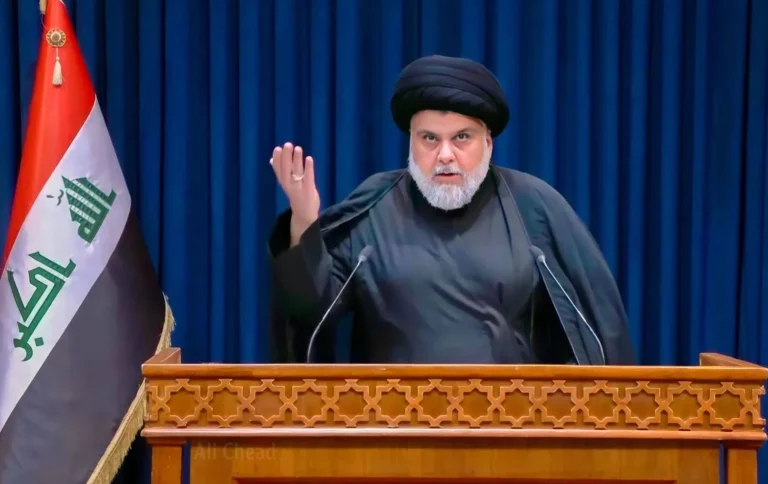
Baghdad, Iraq – Muqtada al-Sadr, the leader of the Sadrist Movement, has blocked attempts by political forces forming the anticipated Iraqi government to include him “merely” in the process. He warned against what he described as “malicious” efforts aimed at inserting his name or the name of his movement into the upcoming cabinet in order to mislead the public.
Warning against “false impressions”
Through his official account, known as “Saleh Muhammad al-Iraqi,” Muqtada al-Sadr issued a strongly worded message. He asserted that attempts by the ruling powers to nominate figures formerly affiliated with the Sadr movement are “unacceptable and will not be tolerated.” He explained that the aim of this move is to market the next government as having a “Sadr” character or support. He categorically denied this, emphasizing that the movement is not concerned with any name emerging from the “current political establishment.”
Earthquake within the “framework”: Maliki returns and Sudani retreats
This firm stance coincided with political reports indicating dramatic shifts within the “Coordination Framework” forces. The name of Nouri al-Maliki, head of the State of Law Coalition, emerged strongly as the leading candidate for prime minister. Reports also suggest that current Prime Minister Mohammed Shia al-Sudani is considering relinquishing his ambition for a second term in favor of al-Maliki, thus reshuffling the cards within the Shia political establishment.
Attempts to “circumvent” the issue and the names being considered
Despite the Sadrists’ veto, political factions continue to circulate the names of figures who previously worked within the Sadrist movement. This is an attempt to create “middle ground” solutions that prevent a complete break with the Sadrists. Among the most prominent of these moves is the nomination of individuals who held high-ranking executive and administrative positions in previous years. They also seek to alleviate political tensions by creating the illusion of “indirect Sadr representation.”
Constitutional dilemma and time pressures
This debate reflects the depth of the political impasse in Iraq. Internal conflicts within the coordination framework are compounded by time constraints related to constitutional deadlines, and the ruling powers have failed to find a consensus formula that enjoys broad national or popular acceptance.