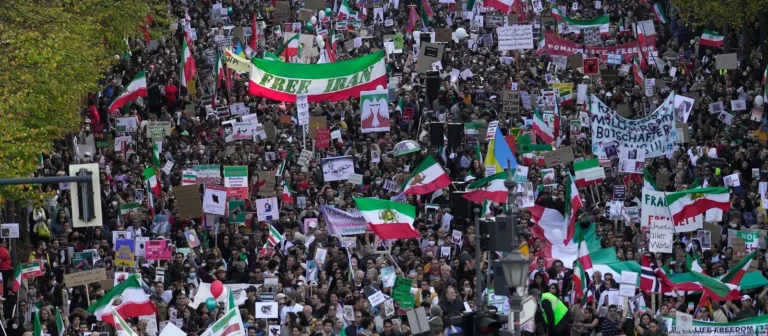
Washington, DC – The US State Department, via its official Persian-language page on the X platform, called on the Iranian regime to immediately cease what it described as its “repression of the people.” It expressed Washington’s deep concern over reports of intimidation, violence, and arrests targeting peaceful protesters.
The US State Department statement read: “Demanding basic rights is not a crime, and the regime must respect the rights of the Iranian people.”
Markets paralyzed and the strike spreads
On the ground, popular protests denouncing rising prices and inflation entered their fourth day. This occurred amidst a state of commercial paralysis that affected vital markets in the capital, Tehran, and other major cities.
According to field reports, the Grand Bazaar in Tehran remained closed for the third consecutive day. Large numbers of vendors in the Shush, Mellat Street, Goldsmiths’ Bazaar, and Iron Bazaar (Shadabad) areas joined the strike.
Map of protests and security tensions
Videos circulating on social media showed scattered protest gatherings in strategic areas of the capital. These included Vanak Square and Molla Sadra Street, where demonstrators denounced the high cost of living. The National Palace and Said Ismail areas also witnessed a complete halt to economic activity and an atmosphere of security tension.
The protests were not limited to the capital, with reports of similar marches in Isfahan, Kermanshah, Shiraz, and Yazd. In Mashhad, local sources indicated a heavy deployment of security forces and riot police in the main squares, anticipating the demonstrations might spread.
Context of the crisis
This wave of protests is fueled by deteriorating economic conditions. Citizens are suffering from soaring prices for basic goods and a sharp decline in purchasing power. Observers believe that the involvement of the bazaar (the merchant class) in the protests places additional pressure on the Iranian government, given the historical economic and political weight this group carries.