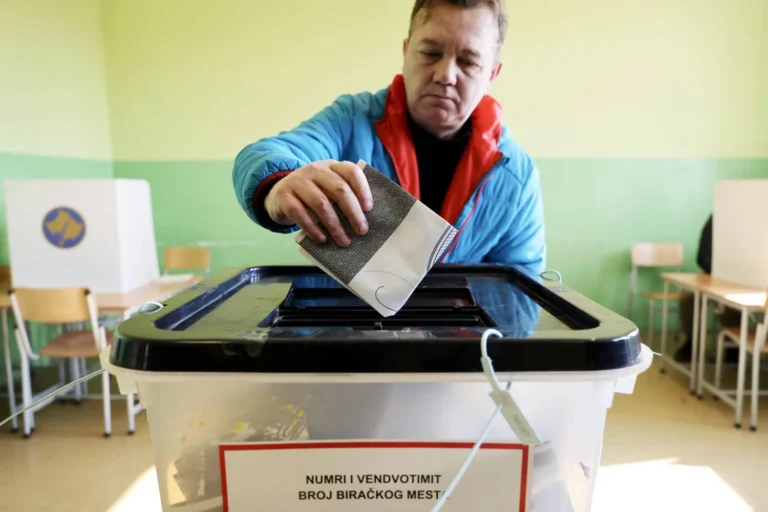
Pristina, Kosovo – Voters in Kosovo went to the polls on Sunday to cast their ballots in the seventh parliamentary election since the country declared independence in 2008. The vote is considered “crucial” for ending a year of political paralysis and determining the course of the country’s strained relations with the West.
Election context: A year of setbacks
These early elections come after the ruling Self-Determination Movement, led by Albin Kurti, failed to form a stable government, despite winning 42% of the vote in the February elections.
The inability to form opposition coalitions and the rejection of a parliamentary speaker have plunged the country into a political deadlock, prompting President Feyosa Osman to call for these new elections.
Korti and the clash with the West
Albin Kurti, 49, faces sharp criticism from his domestic opponents and even some of his foreign allies for his policies in the predominantly Serb north, which have strained relations with NATO and the European Union and led to punitive measures against Kosovo as a result of his assertive policies on sovereignty.
The opposition accuses him of “dismantling” historical ties with the United States and obstructing the path to NATO membership.
“Opposition Alliance” Scenarios
In contrast, the main opposition parties, the Democratic League of Kosovo (LDK), the Democratic Party of Kosovo (PDK), and the Alliance for the Future of Kosovo (AAK), are seeking to…
The formation of a “front coalition” to prevent Korti from returning to power is considered highly likely by observers, who believe it would ensure the formation of a “safe” government that would reintegrate the country into the European fold and end its isolation.
Economic risks and European integration
Kosovo faces a critical financial juncture. Continued political deadlock threatens the loss of aid. There is also the potential loss of access to the €6 billion Western Balkans Growth Plan.
Despite European Commission President Ursula von der Leyen’s promises to lift sanctions and release €400 million, this remains contingent on the formation of a government capable of implementing reforms.
Five EU member states (Cyprus, Slovakia, Spain, Greece, and Romania) still refuse to recognize Kosovo. This makes any internal political misstep a “very costly” proposition for the accession process.
Fioussa Osmani expressed her confidence that today’s elections would adhere to “the highest democratic standards” and would produce swift results, allowing for the formation of governing institutions without further delay.