Washington, USA – The Washington Examiner, an American website, published an analytical article by writer Michael Rubin,
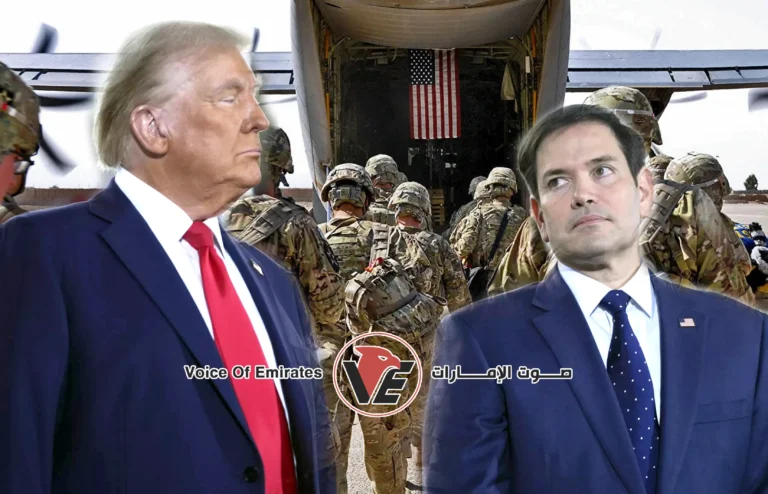
in which he warns against the direction of President Donald Trump’s administration
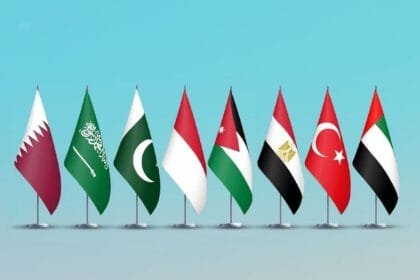
and his Secretary of State Marco Rubio towards forming an international coalition to establish a “stabilization force” in the Gaza Strip.
Since the plan aims to gradually dismantle Hamas’ rule, Washington has made disarmament a prerequisite for a settlement.
The writer sees this as a harbinger of violent confrontations, given the movement’s clinging to its weapons as the sole tool for control and influence.
Türkiye: “The arsonist” in the forest
However, what appears organized on paper clashes with the complexities of reality; as countries like Türkiye seek
To exploit the initiative to establish a new regional influence.
Accordingly, Israel categorically rejects this approach, as Tel Aviv believes that Ankara
aims to empower Hamas politically and militarily, not to bring about peace.
Furthermore, critics likened Türkiye’s involvement in Gaza to trying to “
put an arsonist in charge of managing the forests.”
They consider it a step no less dangerous than deploying the Iranian Revolutionary Guard as a peacekeeping force.
Egyptian security concerns
On the other hand, the concerns are not limited to the Israeli side only, but extend to Egypt,
which is very concerned about any Turkish military presence near its borders in Sinai.
Analysts point to the ideological link between Erdogan and the Muslim Brotherhood.
This raises concerns that the Turkish presence could lead to a resurgence of extremist cells in the region.
In addition to strengthening the influence of groups linked to the Muslim Brotherhood,
this is a scenario that directly threatens Egyptian national security.
Islamic solidarity or support for the Taliban?
In this context, the writer concludes his warning by calling on the Trump administration to recall the bitter Afghan experience;
Türkiye played a double game within NATO, secretly supporting the Taliban through
the rhetoric of “Islamic solidarity” while appearing as part of the international coalition.
Therefore, Rubin believes that repeating this model in Gaza
would necessarily mean the mission’s failure.
The international force has turned into a cover for protecting
armed organizations instead of dismantling them.
The need for a strategic review
The article asserts that rushing towards international solutions
without scrutinizing the identity of the partners is dangerous.
This could lead Washington into a new quagmire similar
to the quagmire of Lebanon or Afghanistan.
Therefore, the success of any “Gaza coalition” remains contingent
on Washington’s ability to neutralize ambitious regional agendas.
This requires a strict security vision that goes beyond mere paperwork
to field guarantees that are not open to interpretation.