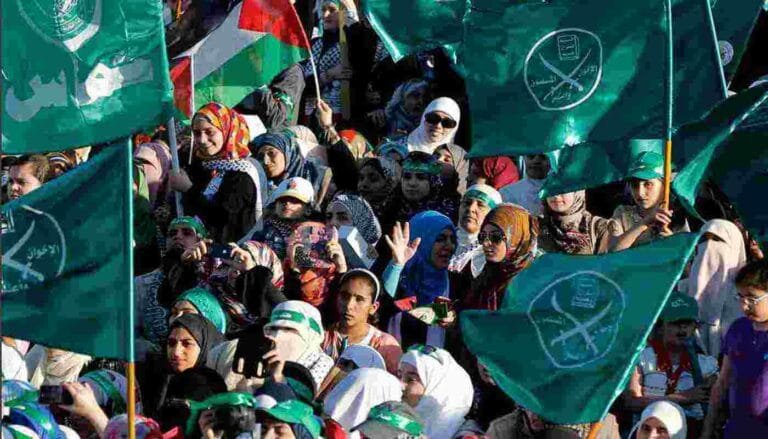
Cairo, Egypt – An investigative report by Voice of Emirates revealed the names of prominent leaders linked to the banned Muslim Brotherhood network in Ethiopia. This network operates under the guise of religious and intellectual outreach, while in reality it is based on the ideology of the Muslim Brotherhood, which is classified as a terrorist organization in several Arab countries.
This activity relies on reproducing the Brotherhood’s discourse in a localized format, targeting youth, students, and academic circles. This is done in an attempt to build a long-term base of influence, away from direct political engagement—a well-known tactic the group employs in environments where it faces security or legal restrictions.
Intellectual leadership with a missionary facade
Idris Mohammed
He is considered one of the most prominent organizers of Muslim Brotherhood activity in Ethiopia and a founder of what is known as the “Ethiopian Muslim Youth Organization.” This organization operates as an alternative framework to the Brotherhood. With a focus on indoctrination and normalization of extremist rhetoric, it leads the publication of magazines such as “Al-Da’wa,” “Bilal,” and “Al-Manar” within universities and religious councils. These magazines have been used as ideological platforms to disseminate the Brotherhood’s concepts of “governance,” “empowerment,” and “restructuring society”—concepts historically linked to the transition from ideology to violence.
Hassan Taji
A youth leader played a pivotal role in ideologically recruiting students through closed discussion groups within universities. He used a conciliatory tone, presenting the Muslim Brotherhood as a “reform project,” while in reality working to cultivate ideologically indoctrinated cadres ready for future organizational recruitment.
Abu Bakr Ahmed Mohammed
He emerged as a link between the Muslim Brotherhood’s activities and certain official religious entities. This was an attempt to lend a false legitimacy to the group’s discourse and expand its sphere of influence within society. This was coupled with the production of publications that recycled the Brotherhood’s literature in a simplified and disguised form.
Siraj al-Din
He was active in education and guidance. He focused on building closed student networks and training young people in organizational work under the guise of “religious and cultural activities.” This is a traditional mechanism historically used by the Muslim Brotherhood to build its initial cells.
decentralized network structure
Investigations indicate that what is known as the “Ethiopian Muslim Youth Organization” is not a benign proselytizing entity. Rather, it is a decentralized network employing the Muslim Brotherhood’s methods of evading prosecution. This is achieved through a division of roles and the dismantling of the apparent organizational structure. Religious councils were utilized as a legal and social cover, allowing for movement without declaring direct organizational affiliation. Furthermore, publications and magazines were not purely religious tools, but rather instruments of ideological mobilization serving the group’s long-term agenda.
The Muslim Brotherhood in Ethiopia: Terrorism without weapons
Despite the absence of direct armed action, the nature of the activity reveals organized intellectual terrorism. This activity is based on infiltrating educational institutions and reshaping the consciousness of young people on extremist ideological grounds. It aims to create a fertile ground for the organization, paving the way for more escalated phases when conditions are right. Regional experiences confirm that the Muslim Brotherhood does not begin with violence, but rather ends with it, after long periods of insidious preaching and societal infiltration.
Conclusions
What is happening in Ethiopia is not religious activity, but rather a subtle extension of a terrorist organization.
The group uses religion as a tool for ideological control, not as an end in itself.
The Muslim Brotherhood networks pose a threat to intellectual and social security, even in the absence of weapons.
The Muslim Brotherhood is not a religious group… but an extremist ideological organization that hides behind religion.