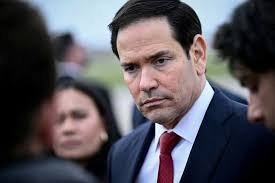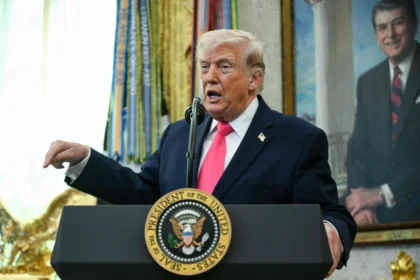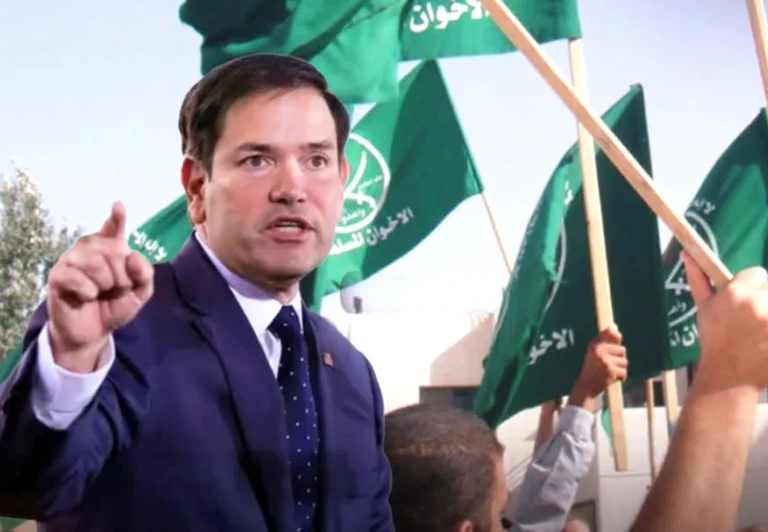
Washington, USA – US Secretary of State Marco Rubio stated that Washington will likely issue a series of announcements related to the Muslim Brotherhood during the next week.
This statement comes in the wake of an executive order signed by President Donald Trump last month,
This requires the US administration to define the legal position regarding the group’s branches in several countries.
Among them are Egypt, Lebanon and Jordan, to consider classifying them as foreign terrorist organizations.
From censorship to “de-Baathification”
In a related context, the Muslim Brotherhood received a strong blow
within the United States after the decision to ban it in the states of Florida and Texas;
This reflected a radical shift in the American political mood from
a phase of control and containment to a path of “eradication”.
Accordingly, observers believe that the success of these two states, with their political weight,
This is a ban that could encourage other conservative states
such as Georgia, Alabama, and Arkansas to follow suit.
This is to take similar steps against the group and the organization “CARE” affiliated with it.
Impact of state decisions
Furthermore, the move by conservative states represents direct pressure
on the federal government and the Trump administration to make a comprehensive decision.
The expansion of the ban within the states increases the likelihood
of imposing broad federal sanctions on the group’s various branches.
However, this path faces complex political and diplomatic considerations.
Especially with regard to US relations with countries where
the Muslim Brotherhood operates legally or participates in its political fabric.
Dimensions of the Muslim Brotherhood classification
In conclusion, the international community is waiting to see what next week’s announcements will bring;
Designating branches of the Muslim Brotherhood as terrorist organizations
would result in asset freezes and international legal prosecutions.
Therefore, the Trump administration remains faced with the challenge
of balancing overarching strategic interests with electoral and political commitments.
Which it cut off by tightening the noose on ideological organizations
that it classifies as a threat to security.