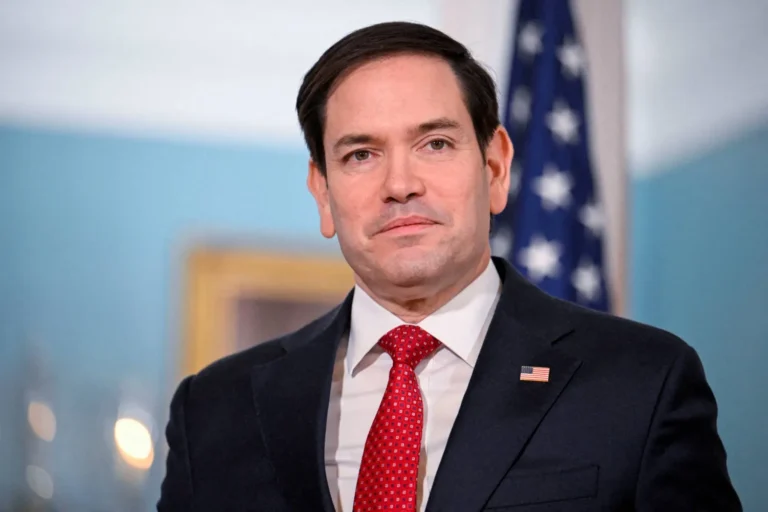
Washington, USA – US Senator Marco Rubio sharply criticized those he called “scaremongers” who condemned the decision to close the US Agency
for International Development (USAID), considering their fears to be exaggerated.
He stressed that the US State Department is fully capable of assuming
the role of providing external support more efficiently.
In this context, Rubio told Fox News that the United States is entering “a new era of foreign aid.”
Ending ideological projects
Furthermore, Rubio explained that the aim of this decision is to end
what he described as “extremist ideological projects”.
These were imposed by previous administrations, and American taxpayers were forced to fund them for years.
In addition, the resolution seeks to dismantle what it called the “wasted complex of NGOs”.
He stressed that this system has drained resources without achieving
results commensurate with the huge amount of spending.
Oversight mechanisms
On the other hand, the US senator stressed that the State Department possesses the capabilities
And the staff allows it to fill any gap resulting from the agency’s closure.
However, this support will be provided in the future according to priorities linked to direct American interests.
Accordingly, stricter control mechanisms will be imposed on spending.
This is to ensure that aid reaches its true objectives, away from partisan agendas.
Senator…Background to the crisis
It is worth noting that USAID has been one of the most prominent
instruments of American foreign policy for decades.
Especially in Third World countries, where it played a key role
in the health and humanitarian relief sectors.
However, the agency has recently come under increasing criticism
from conservative circles, who have accused it of politicizing aid.
And directing it to serve intellectual agendas that do not represent the American consensus.
Potential repercussions
In conclusion, this decision raises serious concerns in many
developing countries that rely heavily on the agency’s programs;
This could lead to disruptions in vital sectors such as food security.
On the other hand, supporters of this move believe it will pave the way
for reducing waste and increasing the effectiveness of subsidies.
Even if it causes a difficult transitional phase internationally.