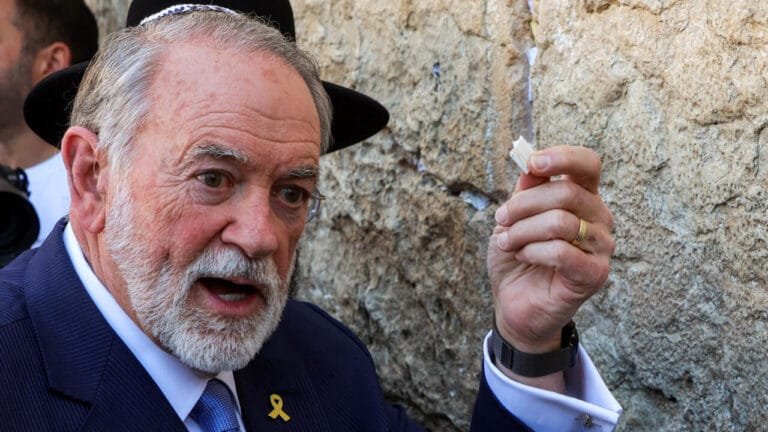
Tel Aviv, Israel – US Ambassador to Israel, Mike Huckabee, delivered a firm message to Tehran, emphasizing that Washington hopes Iran will abandon its pursuit of nuclear weapons in order to avert a full-blown regional conflict. In a detailed interview with the Israeli news site Ynet, Huckabee stressed that safeguarding regional security begins with halting Iran’s nuclear ambitions.
Iran warns of a “war no one wants”.
Huckabee asserted that the primary security concern in the Middle East is Iran’s nuclear program, urging Tehran to “come to its senses.” He explained that recent military operations by the United States and Israel send a clear message: possessing nuclear weapons is not in Iran’s interest. He added, “No one wants war, but Iran must understand that this path will only lead to conflict.”
Earlier, Israeli Foreign Minister Gideon Sa’ar described the Iranian regime as a “threat to regional stability.” He accused Tehran of using Hezbollah to violate Israeli sovereignty. He also emphasized that the Iranian issue is not just an Israeli matter, but an international one.
The head of Israel’s Mossad, David Barnea, warned that the idea of a nuclear bomb remains alive in the minds of the Iranian leadership. He also affirmed Israel’s commitment to preventing uranium enrichment to weapons-grade levels “that have no peaceful justification.”
US-Israeli relations: “Unprecedented coordination”
Ambassador Huckabee denied any strategic gap between Washington and Tel Aviv, describing the current level of cooperation as “unprecedented.” He affirmed that coordination regarding Gaza continues on a daily basis, refuting reports of fundamental disagreements about the future of the ceasefire.
“Without the direct intervention of President Donald Trump, the current ceasefire framework would not have been possible” — Mike Huckabee.
Gaza file: The ceasefire is holding and the operation continues.
Huckabee defended the resilience of the Gaza ceasefire agreement, noting that its continuation for more than two months was “remarkable” given the complexities on the ground. Regarding the next phase, the ambassador explained that the return of most of the hostages and the beginning of a stabilization phase demonstrated the success of the current framework.
He confirmed the possibility of moving forward with the second phase of the agreement in parallel with ongoing efforts to recover the body of the last Israeli hostage in Gaza.
He expressed cautious optimism, noting indications of a willingness among regional actors, including Saudi Arabia, to make diplomatic progress.
Despite the exchange of accusations between Israel and Hamas regarding violations of the ceasefire, Huckabee’s remarks paint a picture of dual American pressure. This pressure consists of preventing Iran from crossing “nuclear red lines” and maintaining a fragile stability in Gaza as a step toward broader regional de-escalation.