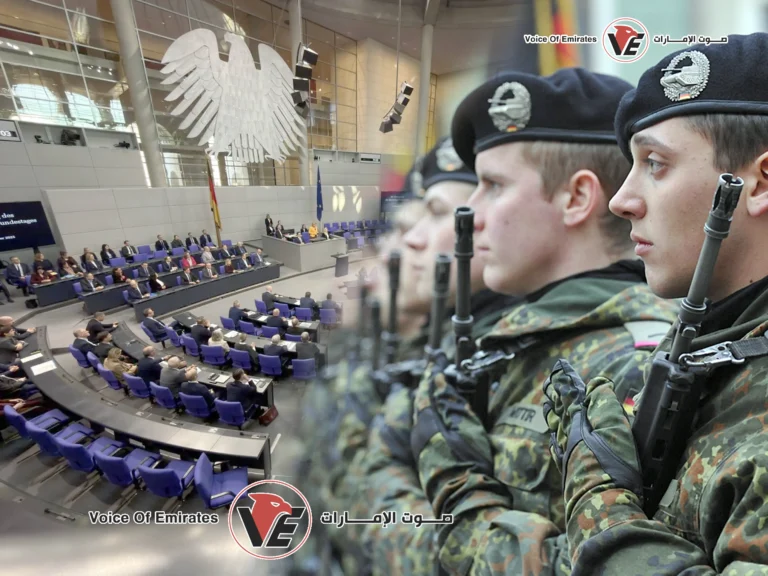
Berlin, Germany – The German parliament (Bundestag) has approved a new funding package of nearly 50 billion euros to modernize and arm the German army.
The Ministry of Defense described this move as a response to an “urgent need” to strengthen military capabilities
in light of escalating Russian threats and the deteriorating security environment in Europe.
Package objectives and bridging readiness gaps
In this context, the German Ministry of Defense stated that
the new package aims to address significant gaps in the readiness of the armed forces.
And improving its combat and defense capabilities, especially in the areas of air defense,
military communications, and ammunition.
Furthermore, the funding aims to accelerate the modernization
of equipment that has suffered from obvious obsolescence as a result of years of underinvestment.
Strategic shift and commitment to NATO
It is worth noting that this decision comes within the framework
of the strategic shift announced by Berlin since the outbreak of the war in Ukraine.
Which included a pledge to raise defense spending to 2% of GDP,
This is in line with Germany’s commitments within the North Atlantic Treaty Organization (NATO).
Accordingly, this package is added to the previous special fund, which was valued at 100 billion euros.
Parliamentary consensus and the debate over priorities
Although the new package received the support of a majority of MPs,
political debate continues regarding public spending priorities.
And the impact of these allocations on other sectors such as health and education.
However, the government stressed that strengthening defense
capabilities has become a strategic necessity that cannot be postponed at the present time.
Political messages and a leading role for Germany
From a security perspective, experts believe this move reflects a growing awareness
of the importance of having an army capable of deterrence and protecting European security.
The package also serves as a clear political message confirming
Berlin’s commitment to its leading role within the European Union.
Especially given the fears of the conflict widening in the east of the continent.
Supporting European military industries
In conclusion, the bulk of the funding is expected to be directed
towards long-term arms contracts with German and European defense companies.
This contributes to supporting military industries and enhancing defense self-sufficiency.
This comes at a time when the continent is witnessing unprecedented security transformations.