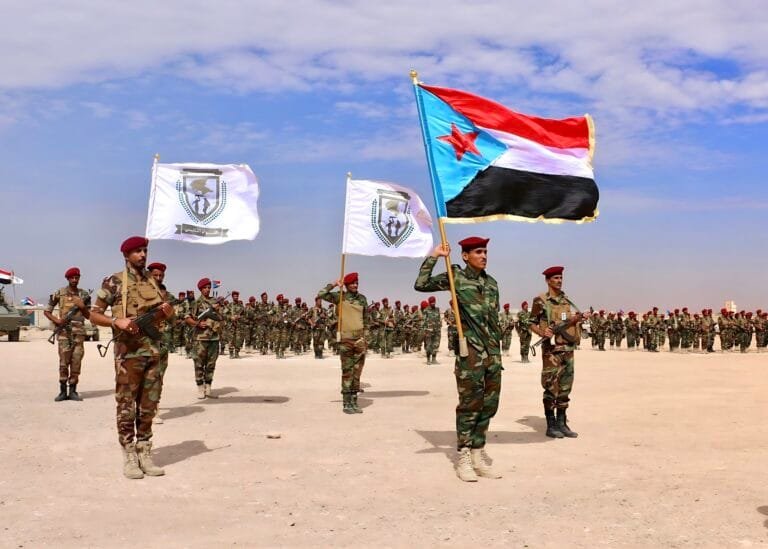
Aden, Yemen – A prominent political report published by the Middle East Forum confirmed that the establishment of a stable south state allied with the Western system is no longer just a political option,
but has become a direct strategic interest for the United States.
The report argues that this step is necessary to secure international navigation and combat terrorism.
Without Washington having to deploy additional forces in the region.
The reality of distinct entities on the ground
The report, prepared by former Yemeni Foreign Minister Khaled al-Yamani,
explained that the South Transitional Council’s recent moves in Hadramawt and al-Mahra,
The situation has been decided in his favor, leading to the end of the military presence
of the factions cooperating with the Houthis.
In this regard, the report emphasizes that Yemen is no longer a truly unified state.
Where two distinct political entities have emerged; a north under the influence
of the Iranian Revolutionary Guard through the Houthis,
The south is run by the Transitional Council with regional support,
securing the main ports and resisting al-Qaeda.
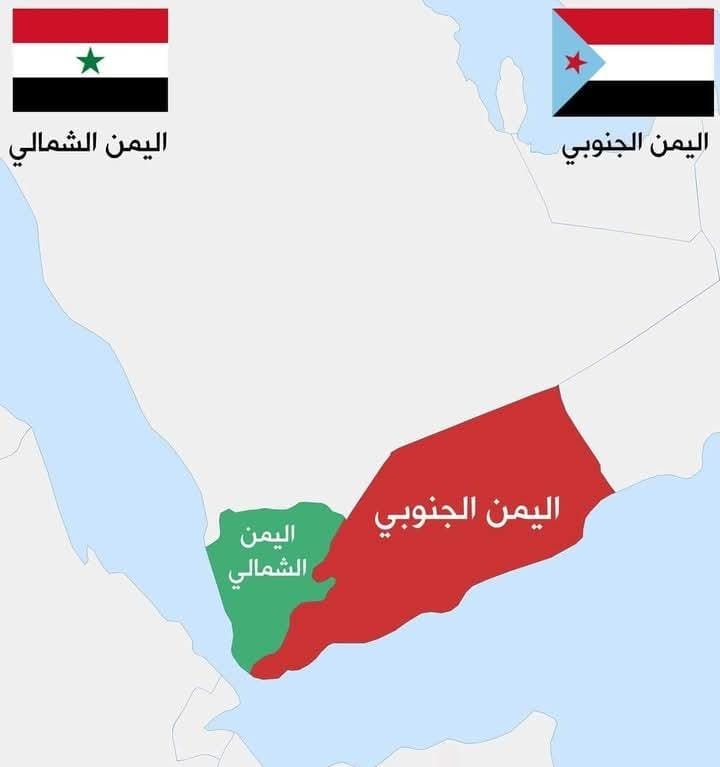
The South: Logistical Importance and Strategic Location
Furthermore, the report highlights the strategic ports of Aden and Mukalla,
in addition to the islands of Perim and Socotra.
As sites of critical importance for supporting Western intelligence and logistical operations.
From this perspective, analysts believe that relying on a stable administration in the south
is a more reliable option than dealing with environments dominated by Iranian influence.
Therefore, this cooperation enhances the flexibility of maritime operations
in the Red Sea and the Indian Ocean through information exchange and anti-smuggling networks.
Transitional Vision and Legal Path
Regarding future prospects, the report touched upon the vision of the head
of the Transitional Council, Aidarus al-Zubaidi,
Which proposes a gradual path to expanding the administration and amending the Riyadh Agreement,
leading to a referendum on self-determination within a few years.
However, the report warns that any unilateral declaration of independence
by the South without international and regional backing would be unacceptable.
This could create a vacuum that could be exploited by Iranian influence
or rival international powers such as China and Russia.
In conclusion, the report presents Washington with two crucial choices:
either to seize this historic opportunity to support an allied south state
that secures global trade routes and undermines Iranian influence,
Or wait and accept geopolitical outcomes that may be formulated
by the United States’ adversaries in the region.