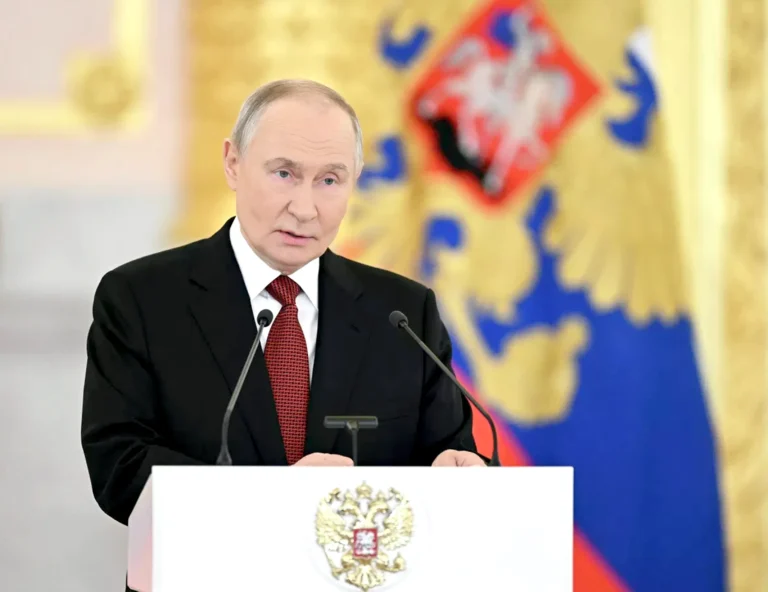
Moscow, Russia – Russian President Vladimir Putin made new adjustments to the command of military groups participating in the war in Ukraine. Consequently, these changes were announced during an expanded meeting with Defense Ministry leadership, attended by Defense Minister Andrei Belousov. Furthermore, Putin emphasized that developing the Defense Ministry’s structure remains an ongoing process based on field experiences gained from the special military operation. In this context, the Russian president requested direct field assessments from commanders along the front line to enhance operational and logistical efficiency.
Meanwhile, Putin approved a Defense Ministry proposal to consolidate all rear and logistics services under a unified command. Specifically, Valery Solodchuk was appointed to lead all rear and logistical services across the Defense Ministry. As a result, Putin noted that managing supply and military support under current conditions constitutes essential combat work. Additionally, the Russian president praised Solodchuk, describing him as one of the most talented leaders within the military establishment.
New Field Appointments and Unmanned Systems Command
On the other hand, Andrei Ivanaev assumed command of the “Center” military group, succeeding Solodchuk. Consequently, Putin underscored that the Center group handles the most crucial tasks in the Donetsk region. Furthermore, Peter Bolgarev was appointed as acting commander of the “East” military group. In this regard, the Russian president commended the East group’s performance, noting its high rate of field progress.
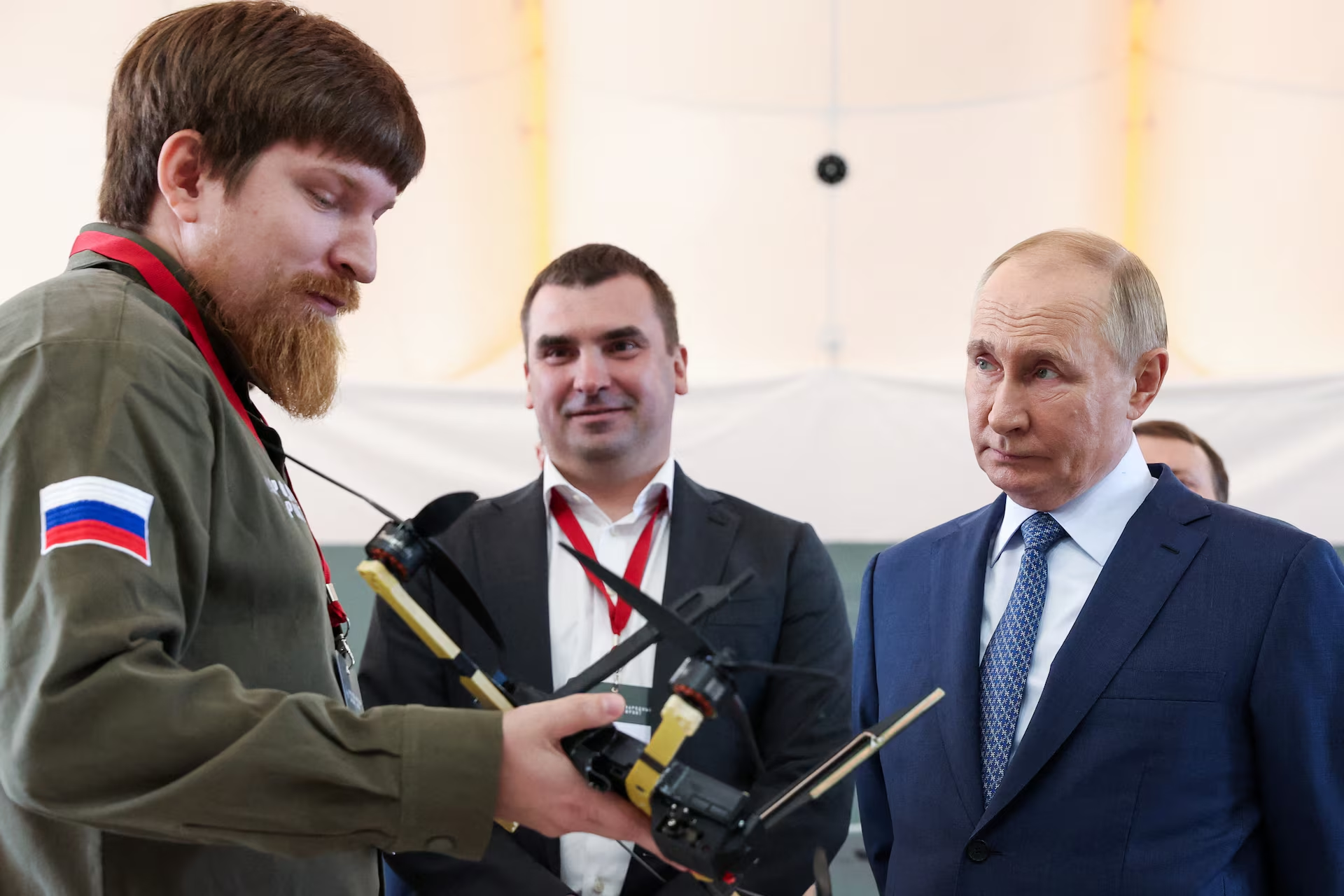
Additionally, Denis Lyamin was assigned to command the unmanned systems and drone forces branch. In this framework, the appointment reflects growing focus on advancing this critical strategic domain. As a result, Russia seeks to realign its command architecture to meet evolving battlefield requirements.
Logistical Reorganization and Operational Outlook
In contrast, these appointments demonstrate Moscow’s intent to apply combat experience directly to operational command. Consequently, unifying logistics support represents a pivotal step toward ensuring continuous combat readiness. Furthermore, observers closely monitor how these command changes will influence frontline momentum moving forward.
Finally, the Russian military continues reorganizing its structural framework alongside ongoing combat operations. Ultimately, attention remains focused on the strategic impact of these leadership shifts across active front lines.