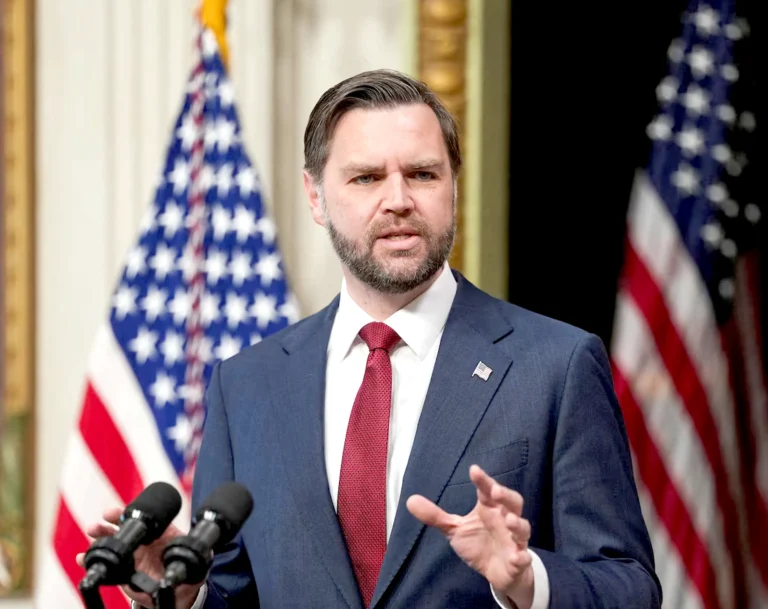
Washington, DC – US Vice President J.D. Vance announced that the United States expects the Strait of Hormuz to remain open to international navigation in the long term and without any tolls.
He also expressed hope that the text of the memorandum of understanding with Iran would be released this week.
In an interview with CNBC’s “Squawk Box,” Vance explained that there are “many technical details” still under discussion and being worked out.
He indicated that the US administration is waiting to see which points Tehran will be willing to compromise on in the next phase.
Maritime navigation controversy
Vance’s remarks come as shippers and shipping companies remain cautious about the details of transiting the strategic waterway.
Iranian state media reported that the strait will be open for free passage for 60 days, with Iran and Oman jointly managing it.
However, the final protocols remain unclear. The US and Iran are expected to sign an agreement to end the dispute next Friday in Switzerland.
The deal involves opening the strait in exchange for lifting the US naval blockade on Iran.
In a related development, Vance noted that shipping traffic through the Strait of Hormuz has already increased in the past 24 hours.
This aligns with the expectations of Lars Barstad, CEO of the oil tanker company Frontline,
who confirmed that ships will begin moving quickly once the agreement is officially signed.
He also expressed hope that the wording of the transit protocol will be clarified in the coming days.
Security warnings from the shipping sector
In contrast, the global shipping group BIMCO warned of continued uncertainty. It emphasized that statements
from Washington and Tehran lacked sufficient information regarding timing and safe routes.
Jacob Larsen, the group’s chief safety and security officer, confirmed that the security situation remains “volatile.”
He also stressed that resuming transit operations at this time remains “extremely risky,”
particularly given ongoing concerns about the presence of naval mines previously laid by Iran in large parts of the Strait.
Israeli position
Regarding the Israeli reactions rejecting the agreement, the US Vice President downplayed the extent of this division,
saying, “I think there are those in Israel who accept the agreement.”
Vance affirmed that Tel Aviv “will certainly have a seat at the table in the new Middle East.”
He also alluded to the US administration’s vision for realigning alliances in the region.
All eyes remain on the details of the agreement expected on Friday
to see if it will definitively resolve concerns regarding international navigation.