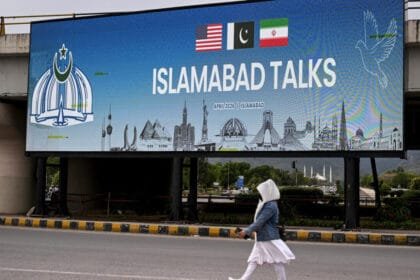
Islamabad, Pakistan – In a high-profile diplomatic move closely watched by world capitals, the White House and the office of Pakistani Prime Minister Shehbaz Sharif announced the start of formal talks in Islamabad on Saturday. These talks aim to forge a historic agreement that will end the armed conflict with Iran and ensure regional stability.
A high-level US delegation with “presidential” representation
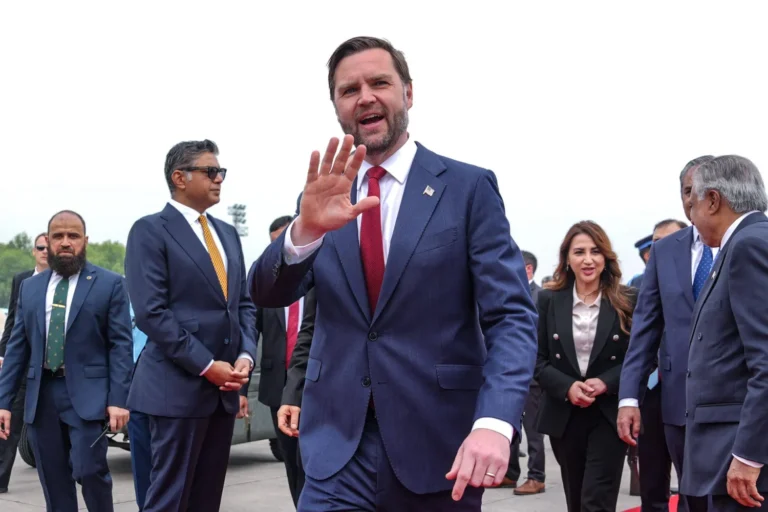
Pakistani Prime Minister Shehbaz Sharif received US Vice President J.D. Vance, who led an exceptionally high-profile delegation, including Special Envoy Steve Wittkopf. Jared Kushner, President Donald Trump’s son-in-law and former advisor, also participated, a clear indication from the White House that these negotiations are being closely monitored by President Trump himself. On the Pakistani side, Deputy Prime Minister and Foreign Minister Ishaq Dar attended the meeting. Interior Minister Mohsin Raza Naqvi was also present, reflecting Islamabad’s efforts to create a conducive environment for rapprochement between Washington and Tehran.
Aspirations for a sustainable peace
A statement issued by the Pakistani Prime Minister’s office said that Sharif expressed his strong hope during the meeting that these talks would represent “a genuine and qualitative starting point towards achieving lasting and comprehensive peace in the region.” Sharif commended the commitment of both the American and Iranian delegations to engage constructively and sincerely in the negotiations from the outset. He also affirmed that Pakistan would continue to play its role as a facilitator and guarantor in moving towards sustainable solutions.
The importance of diplomatic presence
The presence of Vance and Kushner in Islamabad underscores the United States’ pursuit of a comprehensive agreement that extends beyond military aspects to encompass new regional and economic arrangements. This intensified diplomatic activity aims to resolve the most serious military crisis the Middle East and South Asia have witnessed in decades, particularly following the blockade of the Strait of Hormuz and the subsequent exchange of strikes.
Observers believe that the participation of Jared Kushner, the architect of the Abraham Accords, suggests that Washington may propose innovative solutions that transcend traditional negotiation frameworks. Islamabad, on the other hand, appears confident in its ability to manage this challenging dialogue. As the sessions commence, all eyes remain fixed on the outcomes of these meetings. The question remains whether they will succeed in transforming the fragile ceasefire into a lasting peace treaty that guarantees freedom of navigation and the stability of global energy markets.