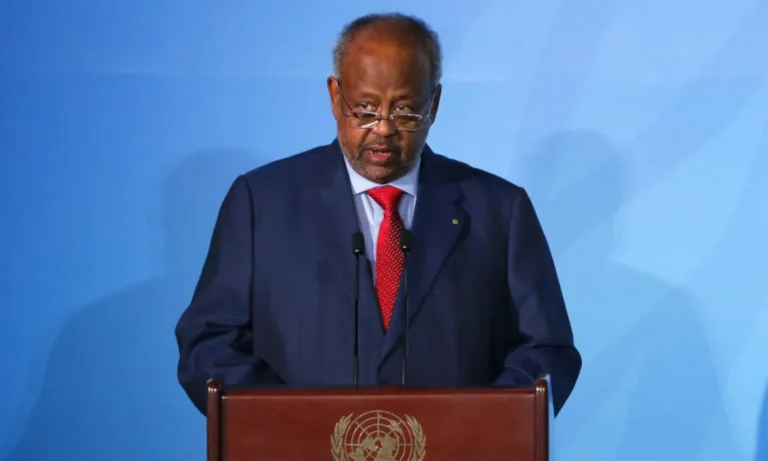
Djibouti – Official results released by Djibouti’s Interior Ministry on Saturday showed that President Ismail Omar Guelleh has been re-elected for a sixth five-year term. He secured a landslide victory with 97.81% of the vote in the presidential election held on Friday, April 10, 2026.
A landslide victory and limited competition
Official data indicated that 78-year-old Guelleh won by a wide margin against his only rival, Mohamed Farah Smaatar, leader of the United Democratic Center Party. Smaatar received just 2.19% of the vote. Before the final results were announced, President Guelleh posted the phrase “I have been re-elected” on his social media accounts, expressing his confidence in the continuity granted to him by the ballot box. Guelleh, nicknamed IOG, has ruled the country of approximately one million inhabitants since 1999, thus entering his 27th year in power. These results are almost identical to those of the 2021 elections, in which he also received over 97% of the vote amidst a widespread boycott by the opposition.
Constitutional challenges and strategic location
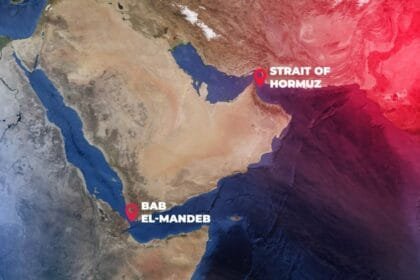
The past period witnessed legal moves that paved the way for this victory. In November 2025, Parliament approved a constitutional amendment that removed the age limit for presidential candidates (which had been set at 75). This allowed his generation to run again despite his advanced age. Djibouti’s importance, despite its small size (23,000 square kilometers), stems from its unique geostrategic location at the Bab el-Mandeb Strait. The strait is a vital artery for global trade, connecting the Red Sea to the Gulf of Aden. Furthermore, the country’s economy relies heavily on its ports, which account for 70% of its GDP. Djibouti also depends on the substantial financial and security benefits it derives from hosting major military bases for the United States, France, China, Japan, and Italy.
Between stability and political stagnation
While Guelleh’s supporters see his long presidency as a safety valve guaranteeing “stability” in the turbulent Horn of Africa, analysts point to future challenges stemming from the lack of a clear and widely accepted successor. Meanwhile, his rival, Samatar, has faced significant difficulties in mobilizing support; his campaign rallies have failed to attract large crowds. Guelleh’s campaign posters, on the other hand, blanket the streets of the capital, reinforcing the dominance of the Union for the Presidential Majority (UMP) in the country’s political landscape.