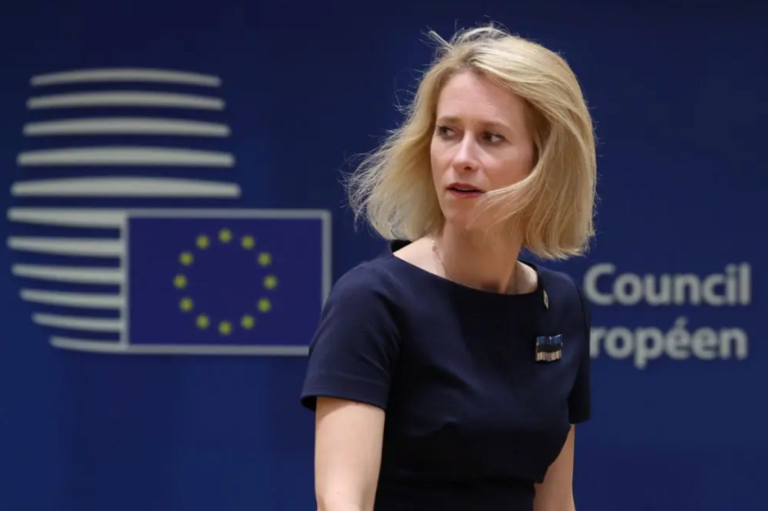
Brussels, Belgium – In a strongly worded European warning regarding the consequences of military escalation in the region, Kaya Kallas, the High Representative of the European Union for Foreign Affairs and Security Policy, asserted that the recent “violent actions” and developments on the ground are placing the ceasefire agreement between the United States and Iran under severe strain, threatening its collapse.
Kallas indicated that the continuation of open military operations undermines diplomatic efforts and hinders attempts to de-escalate the broader regional conflict.
Extending the truce to include Lebanon and disarming Hezbollah
Callas stated that the ceasefire agreement between Washington and Tehran cannot remain confined to a bilateral framework, but “must extend to the Lebanese arena” to ensure genuine regional stability.
In a notable stance aligned with international resolutions, the EU’s top diplomat stressed that these understandings must ultimately lead to “the disarmament of Hezbollah.” She asserted that the presence of armed militias outside the state’s control remains the greatest obstacle to lasting peace.
Criticism of “violent raids” and the concept of self-defense
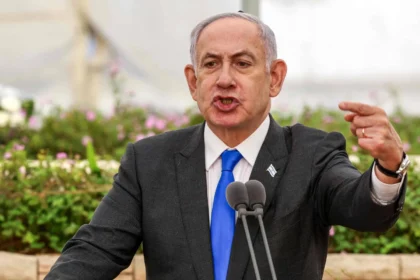
In a post on the X platform, Callas strongly criticized the scale of recent Israeli military operations, stating, “Israeli actions are putting the ceasefire between the United States and Iran under immense pressure. The Iranian truce must be extended to Lebanon.”
She added that the Israeli airstrikes last night, which killed hundreds, make it difficult “to claim that such acts of violence fall within the framework of self-defense.” She was thus indicating that the Israeli military response exceeded internationally agreed-upon limits.
European pressure to salvage the diplomatic track
Callas’s remarks come at a sensitive time, as European powers seek to pressure all parties to prevent the fragile truce from escalating into a full-blown regional war. Brussels believes the ceasefire between Washington and Tehran must be immediately reflected on the northern front. Otherwise, the agreement will lose its strategic value.
These statements place additional pressure on the upcoming negotiations in Pakistan, where Europe is demanding clear guarantees, including a halt to Israeli offensive operations in exchange for concrete steps to curb armed influence in Lebanon. This presents the international community with a real test in imposing a comprehensive ceasefire that leaves no one out.