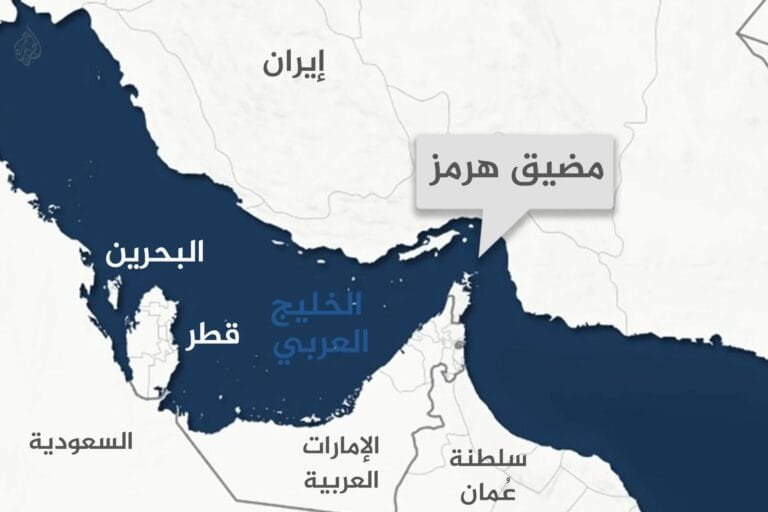
Paris, France – In a firm diplomatic stance regarding the rapidly evolving global energy routes, France announced on Thursday its categorical rejection of any move to impose fees on shipping in the Strait of Hormuz. Paris considers such measures a “flagrant violation of international law.” It also affirmed that freedom of navigation in international waters is an inherent right that cannot be compromised or restricted under any political or economic pretext.
Paris: Freedom of navigation is a non-negotiable “human right”.
In a notable statement to France Inter radio, French Foreign Minister Jean-Noël Barrot commented on proposals to manage navigation in the Strait of Hormuz through a toll system. He said, “This is completely unacceptable, because freedom of navigation in international waters is a universal right, indeed a human right, that cannot be restricted by any obstacles or taxes.” Barrot added firmly, “No one will accept this approach because it is simply illegal. International waters must remain open to global trade and shipping.” The French minister called on Tehran to immediately work towards fully reopening the Strait. He also warned that logistical traffic will not regain its smoothness and reliability until the warring parties reach a comprehensive agreement that ends the current tensions.
A ceasefire and the necessity of including the Lebanese arena
On the military front, Barrault stressed that the recently reached ceasefire agreement between Iran and the United States “must necessarily include military operations in Lebanon.” Paris also strongly condemned the “massive” airstrikes launched by Israel on Wednesday, asserting that the continued escalation on the Lebanese front undermines the prospects for a broader regional truce.
Predictions from the “Islamabad Table”
The French Foreign Minister concluded his remarks by referring to the upcoming peace talks in Pakistan. He also emphasized that France expects Iran to make “a series of substantial concessions” within the framework of this dialogue. Paris believes these concessions are the only way to guarantee long-term stability, end threats to waterways, and ensure the sovereignty of countries affected by the conflict. This paves the way for a new era of collective security in the Middle East and the global trading system.