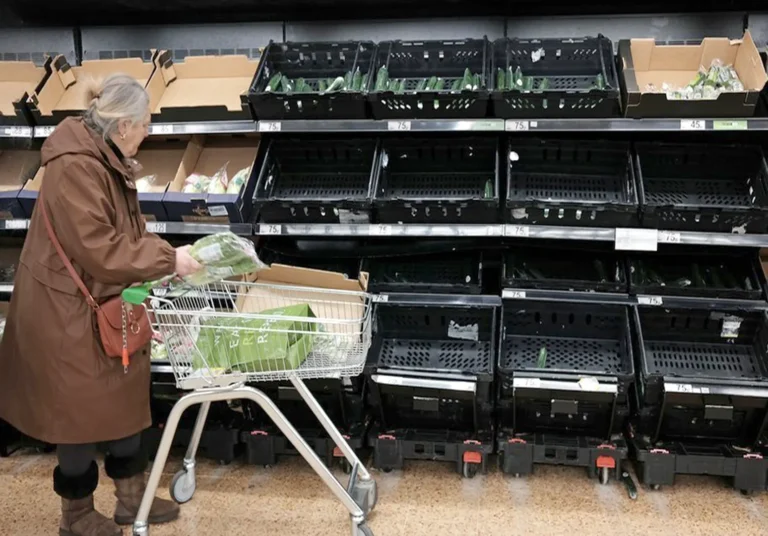
London, United Kingdom – The repercussions of the ongoing war in the Middle East are intensifying, particularly with the escalating tensions surrounding Iran.
These effects have reached European markets, with Britain facing a worsening vegetable supply crisis.
Warnings have been issued of severe shortages and a significant price increase in the coming period.
Unprecedented pressures
British reports indicate that agricultural supply chains have come under unprecedented pressure
due to shipping disruptions and rising transportation and marine insurance costs.
This is particularly concerning given the security threats affecting some vital global trade routes.
Britain is one of the world’s most import-dependent countries
for its vegetable, making it especially vulnerable to external crises.
Furthermore, rising energy prices, driven by geopolitical tensions, have increased domestic production costs in Britain.
This has led some farmers to reduce production, especially in greenhouses that rely on heating, thus exacerbating the crisis.
The phenomenon of excessive storage
Major supermarket chains have indicated they may impose restrictions on the purchase of certain products in an effort to curb panic buying.
Meanwhile, consumer protection groups have warned that prices could surge further if the situation persists.
The British government is attempting to contain the vegetable shortage by exploring alternative
import sources and providing additional support to the agricultural sector.
However, experts believe the crisis could last for weeks, or even months, if tensions in the Middle East do not subside.
These developments reflect the interconnectedness of the global economy,
where the effects of wars are no longer confined to their geographical borders.
They now extend to impact the food supply of citizens in countries thousands of kilometers away from the battlefields.