Cairo, Egypt – The foreign ministers of the United Arab Emirates, Jordan, Turkey, Egypt, Indonesia, Pakistan, Saudi Arabia, and Qatar condemned Israel’s restrictions on freedom of worship in Jerusalem.
They described these restrictions as a flagrant violation of international law and the historical status quo of the holy sites.
In a joint statement, the ministers affirmed their categorical rejection of Israeli measures
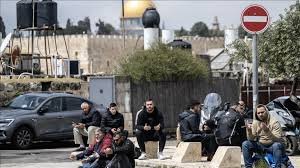
that prevent Muslim worshippers from accessing Al-Aqsa Mosque.
These measures also restrict Christian access to the Church of the Holy Sepulchre.
For example, they prevent prominent clergy from conducting religious services.
Violation of the legal and historical status
The statement stressed that these practices constitute a clear violation of international humanitarian law and an infringement on the fundamental right to freedom of worship. Furthermore, they represent an attempt to alter the historical and legal status quo in Jerusalem.
The ministers affirmed that Israel, as the occupying power, has no sovereignty over Jerusalem. They also emphasized the necessity of respecting the status quo of the Islamic and Christian holy sites.
Warning against escalation
The statement warned of the dangers of continuing these measures,
particularly the closure of Al-Aqsa Mosque to worshippers for 30 consecutive days, including during Ramadan.
It considered this a dangerous escalation that threatens regional and international peace and security.
The ministers also emphasized that Al-Aqsa Mosque, in its entirety, is a place of worship exclusively for Muslims.
Furthermore, the Jerusalem Waqf Department, affiliated with Jordan,
is the sole authority responsible for managing its affairs and regulating access to it.
Call for international action
The foreign ministers called on the international community to take a firm stance compelling Israel to cease its violations and remove restrictions on worshippers’ access to holy sites in Jerusalem.
They also demanded that Israel refrain from any actions that impede the practice of religious rites.
Furthermore, they called for the immediate reopening of Al-Aqsa Mosque and the guarantee of free access to the Old City.
They emphasized that the continuation of these policies would only exacerbate tensions in the region and undermine prospects for stability.