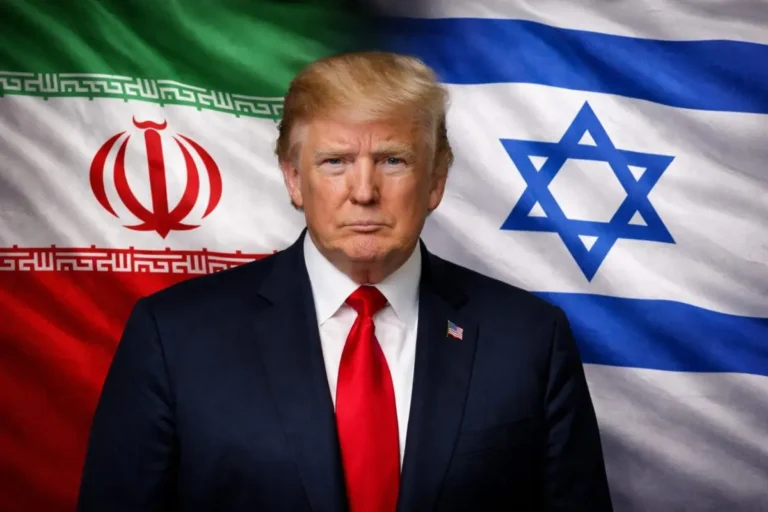
Washington, DC – US President Donald Trump escalated his threats against Iran on Monday, issuing an ultimatum demanding the immediate reopening of the Strait of Hormuz to global trade. Otherwise, Tehran will face the “total destruction” of its vital infrastructure. This warning reflects the US administration’s growing impatience with the ongoing crisis.
Threat of “complete annihilation”
In a fiery post on Truth Social, Trump presented the Iranian regime with stark choices, stating: “If an agreement is not reached soon, which is likely, and if the Strait of Hormuz is not immediately opened, we will end our ‘pleasant’ stay in Iran by blowing up and destroying all of its power plants, oil wells, and Kharg Island.” Trump went even further, hinting at targeting desalination plants, which the U.S. military had previously avoided striking. He asserted that this action would be in response to what he termed Iran’s 47-year “reign of terror.”
Negotiations and crucial demands
While the US president revealed that “serious negotiations” were underway with what he described as a “new and more rational government” to end military operations, he emphasized that progress in this regard did not absolve Tehran of its obligation to meet US demands. These threats come at a highly sensitive time. The world is suffering from skyrocketing energy prices as a result of the closure of the Strait of Hormuz, the vital waterway through which a significant portion of the world’s oil flows.
A clear military message
Trump’s statements reinforce the American military presence in the region. They present the Iranian leadership with two stark choices: either return to the negotiating table in earnest and on terms that guarantee the free flow of maritime traffic, or face a large-scale military campaign aimed at crippling Iran’s export and service capabilities, potentially removing it from the global energy equation for decades. Observers believe this message is not merely a political threat. It is a direct warning of a military operation that could be launched within hours if genuine flexibility is not demonstrated on the ground, especially given the continued tensions and mounting international pressure on Washington to restore stability to energy markets.