Beirut, Lebanon – In a move reflecting the escalating geopolitical tensions in the region, branches of major American universities in the Middle East have announced a complete shift to online learning. These precautionary measures come amid growing concerns that Tehran might target these academic institutions in response to airstrikes carried out by the United States and Israel. These strikes also targeted university and research facilities inside Iran.
Precautionary measures in the UAE and Lebanon
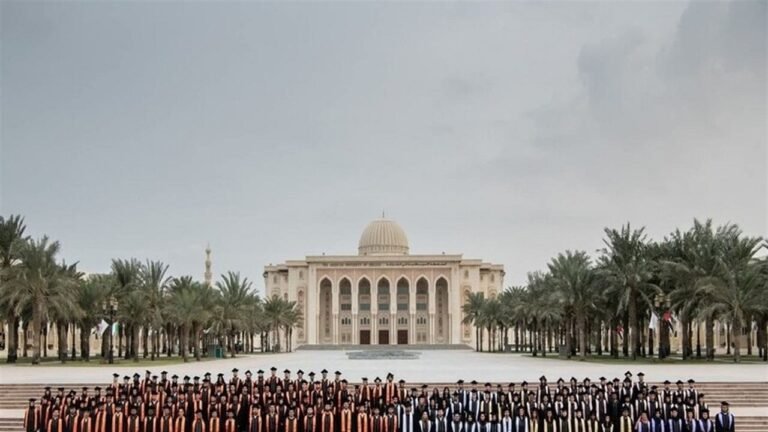
The American University of Sharjah in the United Arab Emirates made a similar decision, announcing the continuation of distance learning “until further notice.” The university explained that all lectures, academic activities, and exams would be conducted online. It also emphasized that it is closely monitoring developments on the ground to ensure the safety of its members. In a related development, the American University of Beirut (AUB) announced, via its official X platform account, that it would be conducting classes online on Monday and Tuesday as a precautionary measure. The university confirmed in its statement the suspension of all activities and exams requiring in-person attendance, with the exception of essential staff. While the administration indicated that there was no evidence of “direct threats” against the campus or its medical centers, it stressed that “the safety of the university community remains the top priority” under the current circumstances.
Revolutionary Guard warnings and Tehran’s deadline
This academic mobilization did not come out of nowhere; Isfahan University of Technology in Iran announced that it had been subjected to a “brutal aerial attack” for the second time by US and Israeli forces.
Following the attack, the Iranian Revolutionary Guard issued a strongly worded statement declaring American and Israeli universities “legitimate targets for retaliation.” Tehran also set a deadline of noon on Monday, March 30, for Washington to issue a formal condemnation of the attacks on Iranian educational facilities. Tehran warned of imminent retaliation if the demands were ignored.
UAE condemns targeting of civilians
For its part, the UAE diplomatic corps intervened in the crisis, with His Highness Sheikh Abdullah bin Zayed Al Nahyan, Deputy Prime Minister and Minister of Foreign Affairs, condemning in the strongest terms any targeting or threat against civilian infrastructure in the region. He emphasized the need to protect educational institutions, including schools and universities. He also stressed the importance of protecting hospitals and residential areas. He reiterated the UAE’s firm rejection of turning civilian institutions into battlegrounds for military conflict.