Tel Aviv, Israel – Israeli Defense Minister Yisrael Katz announced on Friday a decisive decision to escalate military operations against the Islamic Republic of Iran, confirming that the Jewish state is preparing to launch a new wave of strikes that will be “more intensive and extensive.” This statement comes amidst continued rocket fire from Iranian territory toward Israeli cities. This escalation has prompted the military leadership in Tel Aviv to reassess its response strategy.
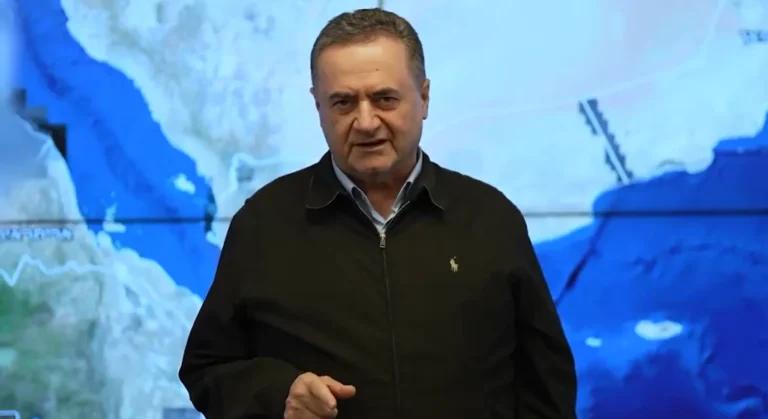
In an official video released by his office, Katz appeared in a stern tone, warning the regime in Tehran against continuing its current course. He said, “Despite our repeated warnings, the firing of rockets and missiles at our citizens continues. Accordingly, the IDF will intensify its strikes deep inside Iran and expand to include new strategic targets that have not been targeted before.” The minister explained that the upcoming target bank will focus directly on vital sectors that provide the regime with the capability to develop and use military means against civilians. His remarks included a clear reference to military manufacturing facilities and logistical support centers.
In his speech, Katz stressed that the Iranian leadership would bear the consequences of its actions, vowing that they would “pay a heavy, and increasingly heavy, price,” and describing the Iranian missile attacks as a “war crime” that could not be tolerated. Military observers believe this statement represents a shift from a “limited response” strategy to a “comprehensive attack” aimed at crippling Iran’s military capabilities in a sustainable manner. This is especially true given Katz’s hints at expanding the scope of targeting to include infrastructure supporting the regime’s war effort.
This verbal and military escalation comes at a time when the region is on high alert. Meanwhile, the international community is closely watching the nature of the new Iranian targets mentioned by the Israeli Defense Minister. As Israel continues to bolster its defense systems, the movements of its air force suggest preparations for large-scale airstrikes that could target command and control centers and energy facilities linked to military activity. This places the conflict between Tel Aviv and Tehran at a historic turning point that could alter the balance of power in the Middle East by 2026.