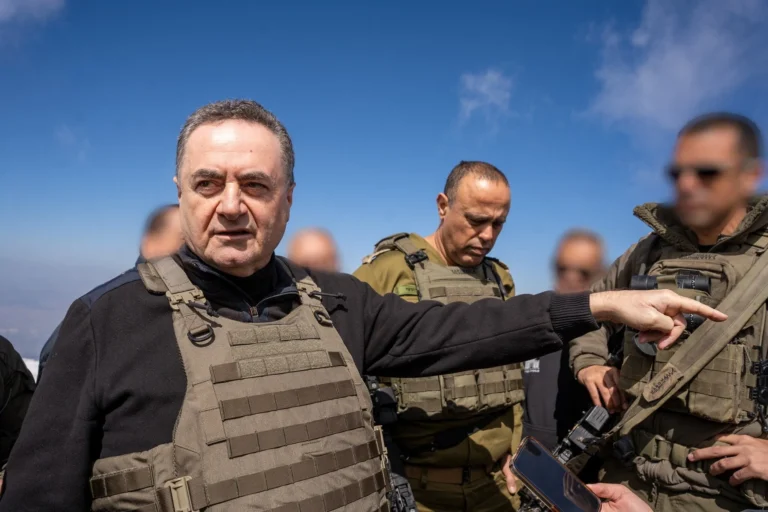
Tel Aviv, Israel – Israel’s security cabinet witnessed dramatic developments on Wednesday. Defense Minister Yisrael Katz, along with Chief of Staff Eyal Zamir, approved a new set of strategic military targets to be struck in both Iran and Lebanon. This Israeli decision comes as part of an expansion of Operation “Lion’s Roar,” which has entered a more intense and bloody phase.
Record numbers in aerial bombardment
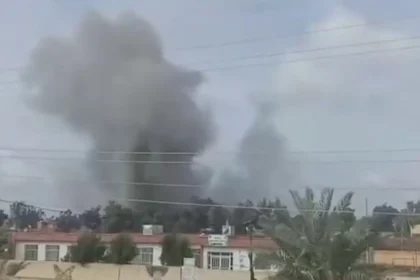
Israeli military sources revealed shocking statistics reflecting the scale of the destructive force used. The Israeli army has exceeded 15,000 offensive munitions fired inside Iranian territory since the start of the operation. Military analysts pointed out that this staggering number is more than four times the amount of munitions used during the 12-day war in June 2015. This confirms that the current confrontation is the largest and most violent in the history of direct conflict between the two sides. The Israeli army spokesperson also announced that the air force carried out thousands of airstrikes targeting vital facilities belonging to the Iranian Revolutionary Guard. These targets included ballistic missile depots, command and control centers, and drone launch sites. This comes within the framework of Tel Aviv’s policy of “strategic attrition” against Tehran.
Deepening operations in Lebanon
On the northern front, the approval of targets extended beyond Iran to include expanded plans for intensifying specific ground operations in Lebanon. This also involved escalating airstrikes against Hezbollah strongholds. This escalation aims to cripple the group’s missile capabilities and prevent it from providing any effective support to the Iranian front. On the ground, the Lebanese National News Agency reported that at least nine people were killed in two Israeli airstrikes targeting a town and a Palestinian refugee camp in the Sidon area of southern Lebanon. These strikes reflect the Israeli military leadership’s determination to pursue targets even in densely populated areas, justifying them under the pretext of the presence of “hostile” military infrastructure.
Horizon of open conflict
Observers believe that Katz and Zamir’s approval of this new set of targets indicates that Israel is not prepared to accept a temporary truce at this time. Rather, it seeks to impose a new reality on the ground by exploiting its overwhelming air superiority.
With the number of munitions used reaching record levels, international concerns are growing that the conflict could spiral out of control. Many also fear it could escalate into a full-blown regional war that would devastate the Middle East.