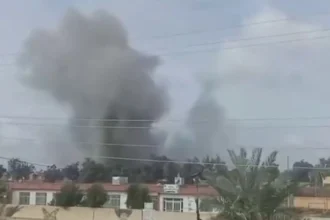
Tel Aviv, Israel – The Israeli military announced on Wednesday that it had carried out a significant military operation targeting the heart of the Iranian capital, Tehran. The operation targeted vital facilities dedicated to the production and development of Iran’s naval arsenal. An Israeli military spokesperson confirmed in an official statement that, under precise intelligence guidance from the Military Intelligence Directorate, Air Force fighter jets had conducted precise strikes in recent days against two key sites for the production of naval cruise missiles in Tehran.
The statement explained that these two sites operated under the direct supervision and command of the Iranian Ministry of Defense. They are considered essential pillars upon which the regime relies for the development and production of long-range naval missiles. These missiles are characterized by their high capability to destroy maritime and land targets swiftly and accurately.
The statement indicated that the airstrikes achieved their objectives with precision, inflicting extensive and structural damage on the production facilities at both sites. This represents a temporary crippling of Tehran’s ability to supply its forces with this type of strategic weapon. The Israeli military considered this operation “an additional and significant step toward deepening the strike against the Iranian regime’s military production infrastructure.” It also affirmed its continued efforts to neutralize threats to regional security and international navigation.
This operation reflects the extent of Israeli intelligence penetration into Iran, where sensitive manufacturing sites were identified within the urban area of Tehran.
While no detailed official statement has been issued by the Iranian side regarding the precise extent of human or material losses, observers believe that targeting facilities belonging directly to the Ministry of Defense places the conflict in a phase of open confrontation. This confrontation targets the masterminds of the Iranian military program, further complicating a regional landscape that has been volatile for weeks.