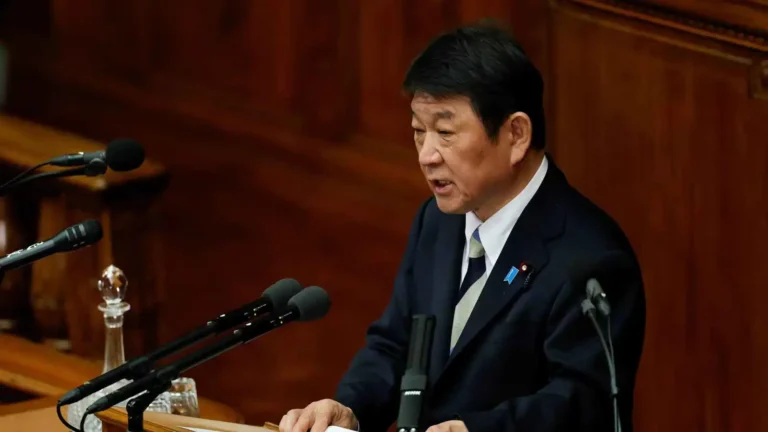
Tokyo, Japan – In a remarkable diplomatic breakthrough amid the drumbeat of war, Japanese Foreign Minister Toshimitsu Motegi announced today the success of Japanese efforts to secure the release of one of its citizens detained in Iran. Motegi confirmed that the citizen, who had been held since last year, was freed last Wednesday. He is expected to arrive in Japan within the next few hours.
“Appeals” diplomacy and the fate of the NHK correspondent
The Japanese Foreign Minister revealed that the release was the result of “repeated appeals” and intensive diplomatic pressure exerted on him by his Iranian counterpart, Abbas Araqchi. Despite this success, a sense of unease remains in journalistic circles. Motegi confirmed that another Japanese citizen remains in detention after being arrested earlier this year. In a related development, the Committee to Protect Journalists revealed that the remaining detainee is a reporter for Japan’s public broadcaster, NHK. The Committee stressed the need to ensure his safety. The Minister indicated that communication continues with the families of the detainees and relevant parties. Authorities are working to resolve this matter as quickly as possible.
“Post-war” scenario in the Strait of Hormuz
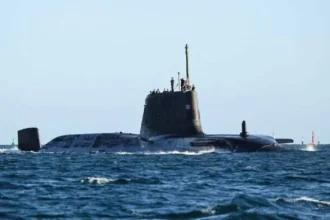
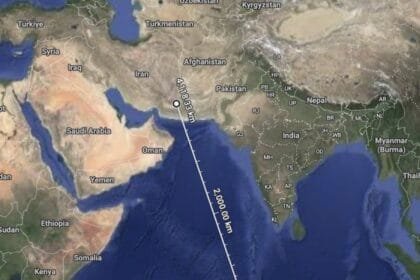
In a parallel development reflecting Tokyo’s concern about the potential disruption of global energy supplies, Motegi outlined his country’s vision for the post-conflict period between Iran and the US-Israeli axis. The minister explained that Japan is considering a hypothetical scenario involving the deployment of Japanese forces to participate in mine-clearing operations in the Strait of Hormuz, contingent upon a ceasefire agreement.
This move is of paramount strategic importance given that approximately 90% of Japan’s oil imports pass through this vital waterway. A fifth of the world’s oil supply also transits it. Motegi emphasized that ensuring the safe passage of ships is a top priority for international energy trade. He also affirmed that while Tokyo has no immediate military plans, it continues its dialogue with all parties, including Tehran. This aims to guarantee the stability of navigation and prevent any disruption to global supply chains already strained by the ongoing conflict.