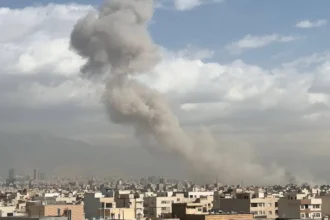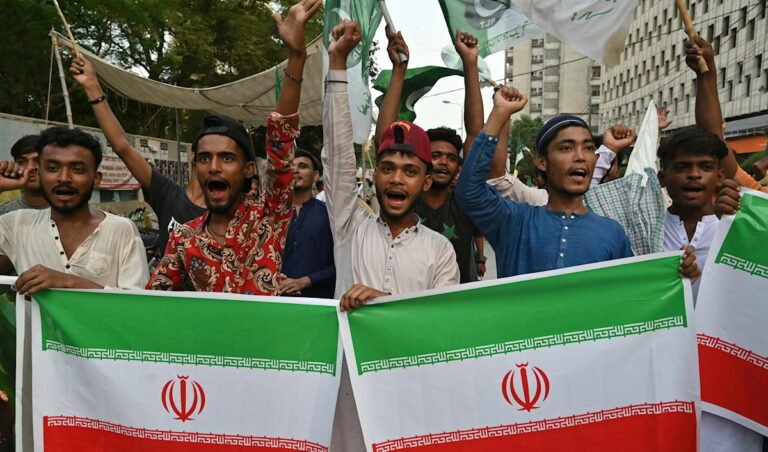
Karachi, Pakistan – A wave of violent protests erupted in major Pakistani cities on Sunday, leaving at least nine people dead and dozens injured. The violence followed an attempt by angry demonstrators to storm the US consulate in Karachi. This unrest was fueled by widespread public anger over the confirmed killing of Iranian Supreme Leader Ayatollah Ali Khamenei in a joint US-Israeli airstrike.
Nine killed in “My Colachi” street
Dr. Mohammad Sabir Memon, executive director of the Trauma Institute at Karachi Civil Hospital, confirmed to the Pakistani newspaper Dawn that nine people were killed and 34 others injured by gunfire during clashes that erupted on Mai Kulachi Street, adjacent to the consulate. According to security sources, groups of young protesters managed to scale the consulate’s main gate and smash its windows. This prompted security forces to use live ammunition, tear gas, and batons to disperse the crowds and repel the attack. There were also reports of direct intervention by US consulate guards against the assailants.
Government appeal for calm
Pakistani Interior Minister Mohsin Naqvi described the events as “a sad day for the Muslim Ummah,” urging citizens in a televised statement to remain peaceful and not take the law into their own hands. Naqvi said, “We feel the same injustice as our brothers in Iran, but my only request is that you protest peacefully to avoid chaos in the country.” However, his appeals failed to quell the rising public anger. The anger had become too great for official rhetoric to contain.
From Karachi to Islamabad
The unrest was not confined to Karachi but spread to several other Pakistani cities. In Lahore, hundreds of activists from the Majlis-e-Wahdat-e-Muslimeen (MWM) attempted to storm the US consulate before police reinforcements intervened. Following tense negotiations, police secured the site. In Skardu, further north, thousands marched in the Gilgit-Baltistan region. Reports also indicated that protesters set fire to a UN building while chanting slogans condemning the airstrikes. Meanwhile, a state of high alert prevailed in the capital, Islamabad. This included the partial closure of roads leading to the US embassy’s diplomatic compound in anticipation of large-scale demonstrations.
Washington warns its citizens
The US Embassy in Islamabad issued a statement confirming that it is closely monitoring the rapidly unfolding events. It also advised its citizens residing in Pakistan to exercise extreme caution, avoid large gatherings, and update their information via the Smart Traveler Registry. This diplomatic mobilization reflects the extent of US concern that Pakistan could become a regional dumping ground for anger that spills beyond its borders. These events come at a time when South Asia appears poised on the brink of an unprecedented wave of unrest.