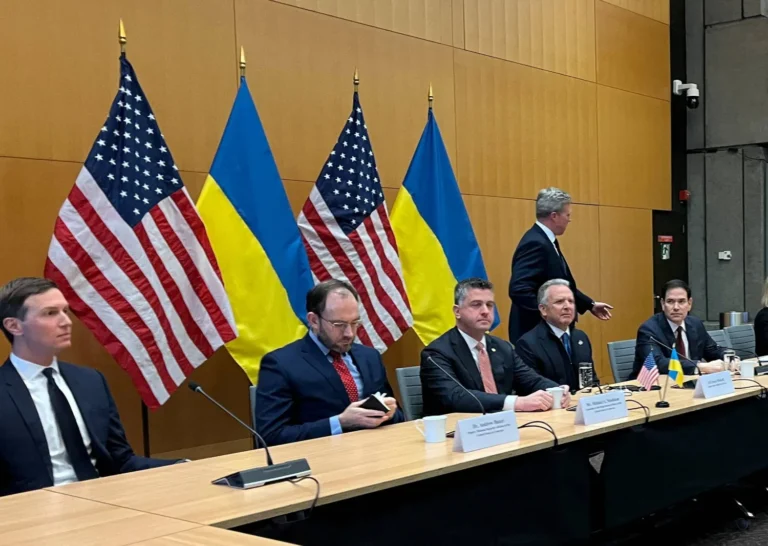
Geneva, Switzerland – Officials from Ukraine and the United States are meeting in Geneva on Thursday. This comes as Ukraine experiences a new wave of Russian airstrikes and precedes planned trilateral talks with Moscow in early March.
Intensive night attacks and field escalation
Moscow announced that it launched approximately 420 drones and 39 missiles toward Ukraine overnight, injuring dozens of people, including children, according to Ukrainian President Volodymyr Zelensky.
Zelensky stated that air defenses intercepted most of the missiles. However, critical infrastructure and residential buildings sustained damage in eight regions. This escalation comes as the war enters its fifth year.
Preliminary meeting for broader negotiations
The Ukrainian negotiator Rustam Umarov is participating in the Geneva meeting, along with Kirill Dmitriev. The American delegation is comprised of envoys Steve Wittkopf and Jared Kushner, son-in-law of US President Donald Trump.
The meeting was preceded by a 30-minute phone call between Trump and Zelensky. The call addressed preparations for new trilateral talks involving the Ukrainians, Russians, and Americans, scheduled for early March.
Exchange of remains and cautious Russian statements
Ahead of the talks, Moscow announced it would hand over the remains of 1,000 Ukrainian soldiers in exchange for the bodies of 35 Russian servicemen. This humanitarian gesture coincided with the ongoing negotiations.
For his part, Russian Foreign Minister Sergey Lavrov emphasized that his country was not in a hurry to reach an agreement. He also stressed that there were no “deadlines” for ending the conflict.
American pressure and existing complications
Washington is seeking to advance efforts to end the war that erupted in February 2022. However, negotiations remain complicated, particularly regarding the Donbas region in eastern Ukraine. In this region, Moscow insists on the withdrawal of Ukrainian forces from areas it controls, a demand rejected by Kyiv.
These developments come amid continued diplomatic pressure. Furthermore, there are differing positions on the terms for ending one of the most violent conflicts Europe has witnessed since World War II.