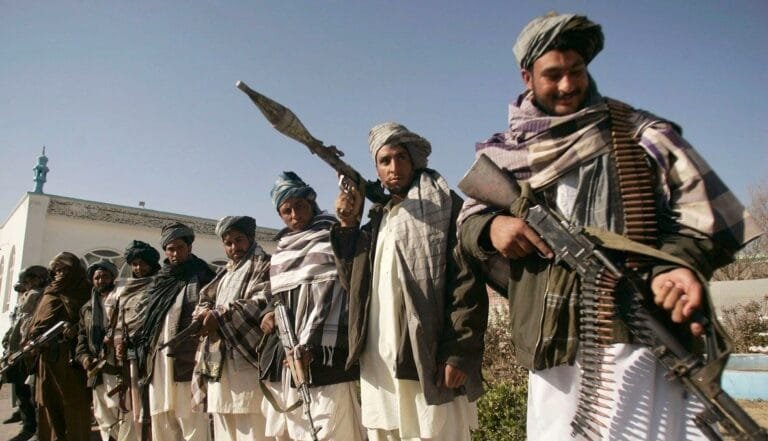
Kabul, Afghanistan – Taliban spokesman Zabihullah Mujahid warned that the movement would respond militarily to recent Pakistani airstrikes on Nangarhar and Paktika provinces in eastern Afghanistan. He described the operations as “unacceptable” and called on the international community and Muslim countries to pressure Islamabad to halt the attacks.
Air strikes and border tensions
On Sunday morning, the Pakistani Air Force carried out airstrikes on specific areas in eastern Afghanistan, resulting in the deaths of at least 13 civilians. Pakistan, in turn, announced that it had killed 70 militants. Taliban soldiers and Pakistani border guards have exchanged fire along the border in recent days, with no official figures released regarding casualties.
Mutual accusations
Mujahid accused Pakistan of targeting civilians and providing a “safe haven” for ISIS elements. He asserted that ISIS has no real presence in Afghanistan and that the Taliban has conducted extensive operations against it within the country. For its part, Pakistan announced that the recent attacks were carried out in retaliation for the ISIS attack on a mosque in Islamabad that left 33 dead.
failed negotiations
Several rounds of negotiations between the Taliban and Pakistan took place in Istanbul, Doha, and Jeddah, but without tangible results. Mujahid accused Pakistan of obstructing diplomatic efforts and refusing open dialogue. He called on Muslim countries to pressure Pakistan to change its policies, although only India issued official condemnations of the attacks.
Women’s health and services crisis
A recent UN report revealed that the Taliban imposed strict restrictions on the distribution of contraceptives and women’s health services in several provinces. This led to price hikes and reduced access to healthcare, as well as widespread gender discrimination in hospitals and health centers.
Problems of state employees
Government employees reported that the Taliban had not paid their February salaries, despite soaring prices during Ramadan. They also noted a significant disparity between the salaries of Taliban members and civilian employees, exacerbating the already difficult living conditions for government workers.
This escalation reflects the ongoing humanitarian and security crisis in Afghanistan. It is occurring amidst persistent tensions along the border with Pakistan and severe restrictions on women’s rights and access to basic services.