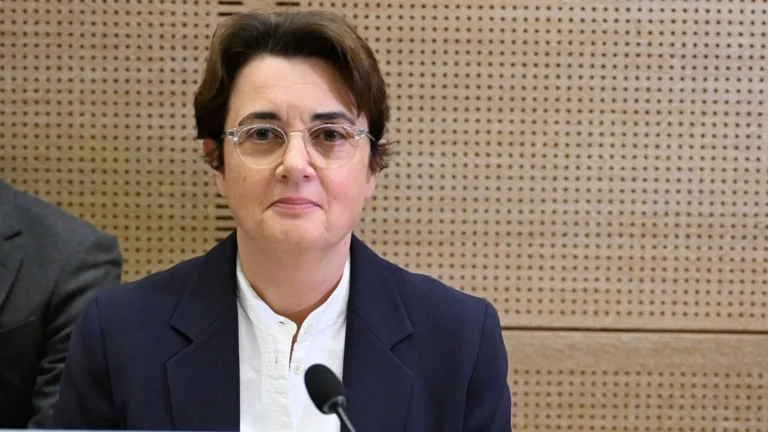
Paris, France – The president of the Louvre Museum, Laurence Descartes, submitted her resignation to French President Emmanuel Macron, which he formally accepted, four months after a major robbery at the world’s most famous museum, amid ongoing investigations to uncover the fate of the stolen jewels and strengthen the security system.
Details of the robbery
The robbery took place in less than eight minutes, as the perpetrators stormed the museum, broke a window, and then used power tools to open the jewelry display cases, before fleeing with eight pieces of French crown jewels, valued at 88 million euros ($102 million).
The suspects and the mechanism for arresting them
The prosecutor explained that one of those arrested is a 34-year-old Algerian national, and the other is a 39-year-old French national. Their DNA was used to identify them on safes and motorcycles used in the escape. The investigation revealed that four people carried out the operation, using a van with a freight elevator to reach a window overlooking the Seine River. They then left the scene on two motorcycles heading east towards Paris, where other vehicles were waiting for them.
Security vulnerabilities and reporting delays
Paris police chief Patrice Faure confirmed that the surveillance systems inside the museum were old and slow in transmitting images, and that the delay in the initial reporting contributed to the success of the operation, adding that the complete system upgrade will take until 2029–2030 at a cost of $93 million.
The fate of the jewelry and political pressures
The missing jewels remain, and experts believe they may have been dismantled and refinished to obscure their features, making their recovery even more difficult. Meanwhile, Culture Minister Rachida Dati is facing mounting pressure, but she has rejected the museum director’s resignation, insisting that the alarm systems functioned, despite the existence of actual security gaps.
Future steps
Foure pointed to the need to monitor the permits of surveillance systems in all cultural institutions, with the use of artificial intelligence tools to detect abnormal movements, to ensure the protection of French cultural heritage and prevent the recurrence of such lapses.