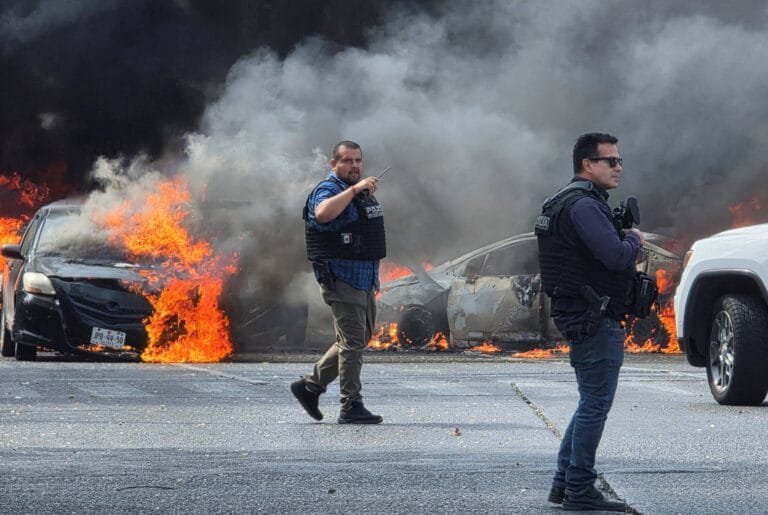
Bogotá, Colombia – The so-called “El Mencho earthquake” has triggered a wave of political and security tensions in several Latin American countries. This comes amid fears that the repercussions could extend to the Colombian-Ecuadorian border, a scenario reminiscent of previous episodes of border tensions between the two nations.
Reports indicate that the fallout from the crisis – described as a violent political tremor – has led to a surge in mutual accusations regarding support for armed groups and unresolved security issues along the shared border. This has heightened tensions in sensitive border areas.
Observers fear that the harsh rhetoric could escalate into action, especially given the security and military movements to reinforce deployments on both sides of the border. Analysts believe that any miscalculation could ignite a limited confrontation, which, in turn, could quickly escalate in a region already grappling with complex security challenges.
Regional and international actors are also attempting to contain the situation through diplomatic channels to prevent it from escalating into a direct confrontation that could negatively impact stability in northwestern South America. It could also affect shared economic and security interests.
Experts believe that using the term “earthquake” not only reflects the magnitude of the crisis but also the rapidly unfolding nature of its repercussions, where internal calculations in both countries intersect with more complex regional dynamics.
Amidst the rhetoric of escalation and attempts at de-escalation, the question remains: Will diplomacy succeed in containing the aftershocks of El Mencho? Or is the region on the brink of a new confrontation that will redraw the lines of tension in Latin America?