Tehran, Iran – The Iranian government has intervened in the escalating student crisis, affirming its recognition of students’ right to express their opinions. However, it has imposed strict controls to prevent any transgression against national and religious principles. This comes amidst the ongoing wave of protests that erupted last Saturday at the country’s major universities.
The official position: a call for dialogue and a warning against excesses
In the first official comment on the student protests, government spokesperson Fatemeh Mohajerani stated that students are active members of society and have the right to protest. However, she emphasized the need to “respect red lines and sacred values.”
Mohajerani called on universities to listen to students’ voices and open channels for dialogue.
The spokesperson stressed the importance of continuing the educational process and the necessity of reopening universities as normal.
On the ground: Division and clashes on campus
The protests spread to prominent universities in the capital, Tehran, and other cities, with reports and videos revealing a stark contrast in the nature of the demonstrations:
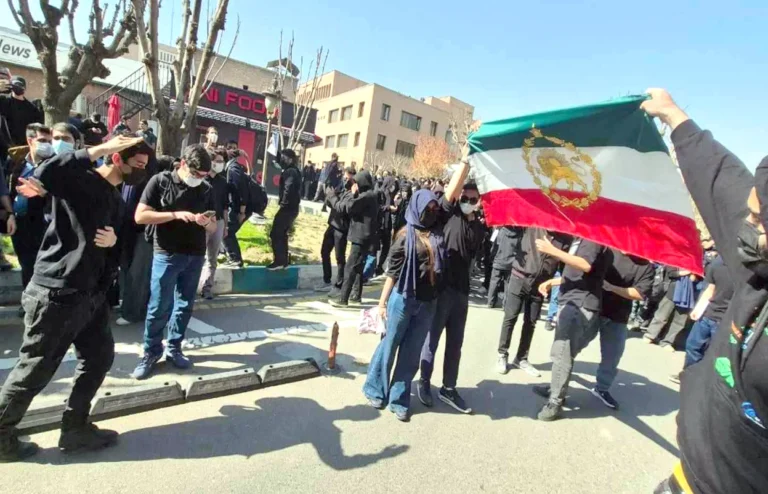
Tehran University, Sharif University of Technology, and Al-Zahra University (a women’s university) witnessed gatherings demanding political change. Female students chanted slogans against the leadership.
Pro-government student demonstrations also took place in Tehran and Mashhad. This led to polarization on campuses.
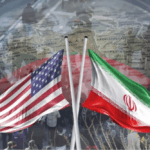
At Amir Kabir University, gatherings turned violent, with opposing groups throwing stones. Some protesters burned the Iranian flag, while others responded by burning the American flag.
Despite the heightened tensions, a notable scene unfolded at the gates of Amir Kabir University. A number of students held a group prayer amidst the protests, attempting to emphasize their religious identity despite their political differences.