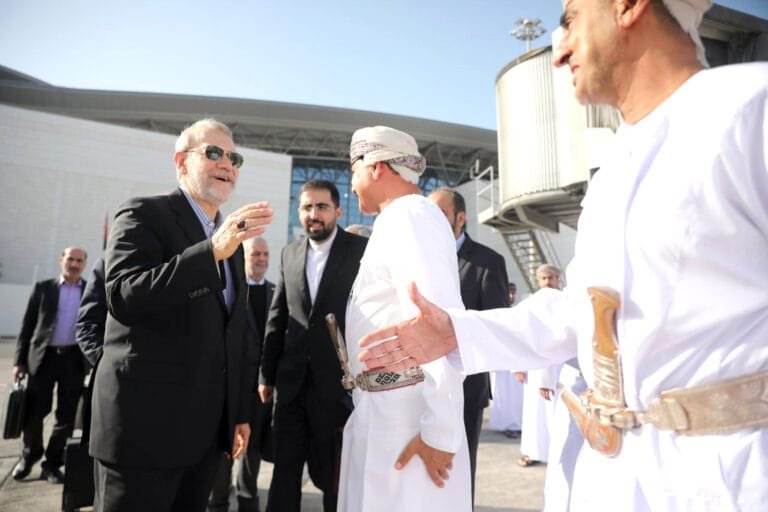
Muscat, Oman – Ali Larijani, Secretary of Iranian Supreme National Security Council, departed for the Sultanate of Oman on Tuesday.
This move is considered a significant indication that Tehran is nearing its official response to the nuclear settlement proposals.
Meanwhile, there is widespread international anticipation regarding the course of the indirect negotiations between Iran and the United States.
Larijani’s visit to Muscat is of exceptional importance, as it is widely believed
that he is carrying Iranian official response to Washington’s proposals on the nuclear issue.
He will deliver it through Omani channels, which have played a pivotal role in mediating between the two sides for months.
This visit represents another step in a series of shuttle diplomacy efforts taking place in the region.
These efforts are occurring against the backdrop of the recent momentum gained by the nuclear negotiations.
Araghchi heralds a potential draft agreement
In a related development, Iranian Foreign Minister Abbas Araqchi announced that his country will present a “draft of a possible agreement” to the United States within the next few days.
This marks a significant development in the negotiations, which have witnessed both escalation and setbacks in recent months.
Araqchi emphasized that Tehran is approaching this stage with utmost seriousness. He also stressed that his country will not relinquish its legitimate right to possess a peaceful nuclear program.
This stance reflects Iran’s desire to strike a balance between adhering to the diplomatic process and safeguarding its strategic interests.
Araqchi’s statements have injected diplomatic momentum into the negotiations at a sensitive juncture marked by rapid regional transformations.
Simultaneously, international pressure is mounting on Tehran to find a lasting solution to the years-long crisis surrounding its nuclear program.
Geneva is the date for a new round of negotiations
Regarding the timeline for the talks, a new round of indirect negotiations between Iran and the United States is currently scheduled to take place in Geneva next Thursday.
This round is being mediated by Omani Foreign Minister Badr al-Busaidi,
who has proven himself an effective and trusted mediator for both sides over the past months.
The upcoming Geneva talks are considered among the most important rounds since the start of this negotiation process.
This is because they come after Iranian statements regarding the draft of a potential agreement.
Consequently, the coming days could witness a significant shift in the course of the nuclear crisis,
which is impacting regional and international stability.