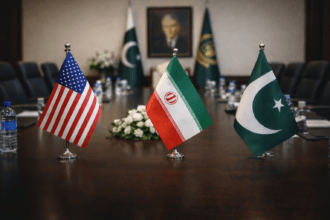

Washington, DC – The White House has affirmed that diplomacy remains President Donald Trump’s preferred approach to dealing with Iran. This message appears to be directed as much to the American public as to Tehran, amidst escalating regional tensions and an exchange of warnings in recent days.
US administration officials explained that Washington still considers negotiation the most viable path to avoiding a direct military confrontation. At the same time, they emphasized that “all options are on the table,” but political solutions remain the priority. They added that indirect communication and diplomatic channels are ongoing, in an effort to prevent any slide toward open conflict.
This statement comes at a sensitive time, following a sharp escalation in rhetoric between the two sides. These statements have been accompanied by military movements reflecting a state of anticipation and readiness. Observers believe that reaffirming the priority of diplomacy does not mean the absence of leverage. Rather, it falls within a dual strategy combining deterrence with keeping the door open for negotiations.
In contrast, Tehran continues to send mixed signals, oscillating between warnings and a readiness for dialogue. This reflects the complexity of the situation and the interconnectedness of the issues, whether related to the nuclear program or its regional influence. Analysts emphasize that any progress on the diplomatic track will require mutual concessions. However, this does not appear easy given the accumulated mistrust between the two sides.
Experts also point out that Trump’s calculations are inseparable from the domestic context in the United States. He seeks to project a firm approach without sliding into a new war, which could have high political and economic costs. Meanwhile, Iran is keen to demonstrate its resilience and deterrent capabilities. It also leaves the door open for any negotiating track that safeguards its interests.
Regional and international capitals fear that any miscalculation or accidental incident could ignite a wider conflict in the Middle East. This would directly impact energy markets and the security of navigation in vital maritime routes.
Between the language of warning and the tone of de-escalation, the situation stands at a delicate crossroads. Either diplomacy will succeed in cooling down the front, or the exchange of statements will turn into a prelude to a more tense phase, the title of which is a test of wills and the limits of power.