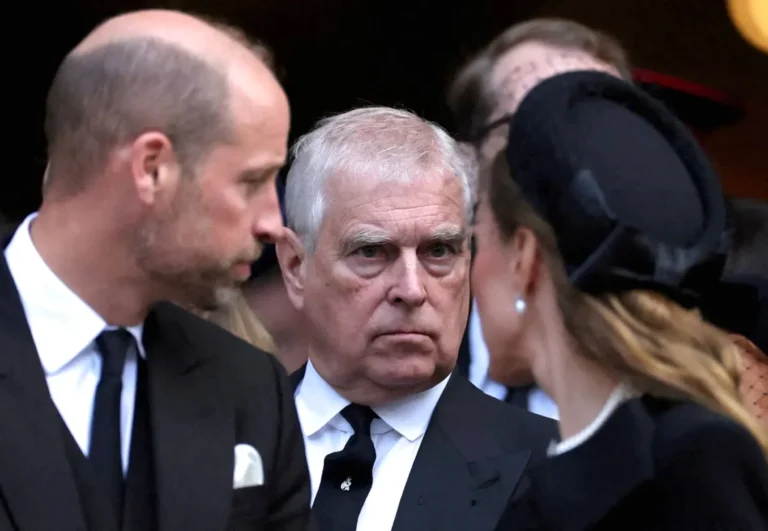
London, England – The British royal family is facing a new chapter of crisis. A British official revealed to Reuters that the government is considering new legislation aimed at removing former Prince Andrew Mountbatten-Windsor, the younger brother of King Charles III, from the line of succession to the throne.
This bold move comes as a direct consequence of the ongoing investigations into his relationship with the late American financier Jeffrey Epstein.
Details of the investigations and arrests
The past few days have seen an unprecedented legal escalation against the former Duke:
The arrest of the Prince: Police arrested Andrew last Thursday – which happened to be his 66th birthday –
on suspicion of offenses relating to “the rules of conduct and working in a public office”.
Current charges: The investigation centers on allegations that he sent classified government documents to Epstein.
Mansion search: Authorities searched his former residence on Friday for additional evidence.
Conditional release: The prince was released pending further investigation after being detained for more than 10 hours, with no formal charges yet filed.
Legislative and international challenges
The British official emphasized that removing Andrew from the line of succession is not a simple internal decision. Instead, it requires a complex legal and diplomatic process. “Any change in the order of succession requires consultation and agreement with the Commonwealth countries, headed by King Charles III.” News of the “fall” dominated the global and local media landscape. In particular, British newspapers reflected a state of shock:
The Daily Mail devoted its first 15 pages to covering the story. It described the situation as a historic collapse of the prince’s status.
Newspapers also quoted King Charles as firmly asserting that “the law must take its course,” referring to the removal of his brother’s official protection.
On the street, Reuters photographs circulated showing the prince looking pale and worried in the back of his car. Therefore,
this prompted a wave of commentary about the end of the public career of the man who was once a naval officer and the favorite son of the late Queen Elizabeth II.