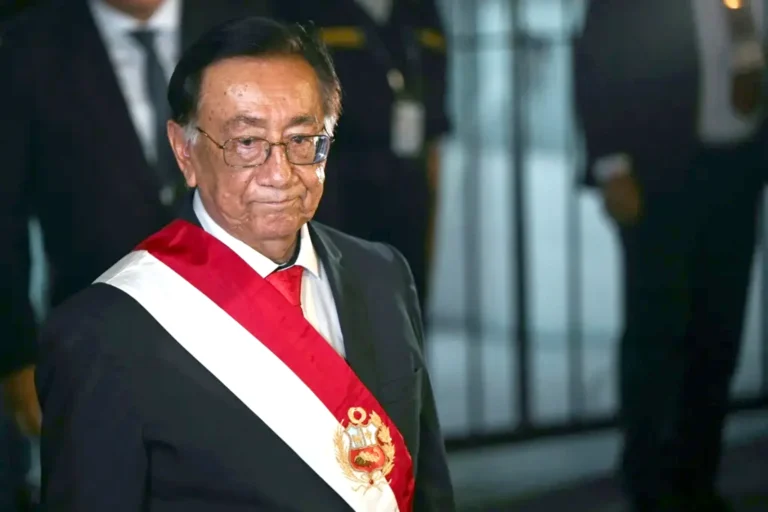
Lima, Peru – In a move reflecting the country’s chronic political instability, Peru’s Congress elected former congressman and judge José María Balcázar as the new interim president. This appointment fills a power vacuum just one day after the removal of the previous interim president, José Jerry. He was ousted amid corruption allegations after only four months in office.
Details of the election process
Balcázar, 83, secured a majority of votes in the 130-member legislature, defeating three other candidates. This makes him Peru’s eighth president in just one decade.
He is also the fourth president to be dealt with by the current Congress (since 2021). This follows the impeachment of Pedro Castillo, Deyna Boluarte, and José Jerry.
Tasks of the transitional phase
Balcázar is slated to lead the country for only five months. During this period, his primary task will be overseeing the transfer of power to the winner of the upcoming general elections on April 12. Peruvian voters will then elect a new president, members of the Chamber of Deputies, and 60 members of the Senate.
As for the electoral system, if no presidential candidate secures more than 50% of the vote, a runoff election will be held between the two leading candidates in June.
The roots of the political crisis in Peru
For a decade, Peru has suffered from political instability stemming from a power struggle between the executive and legislative branches.
Analysts attribute this turmoil to the failure of successive presidents to secure strong legislative support. As a result, presidents have become vulnerable to pressure.
Legislators have broadened the interpretation of a constitutional provision that allows for the impeachment of presidents. They have transformed it into a political tool for ousting opponents.
With the election of Balcázar, Peruvian political circles hope for a peaceful election in April. They aspire to break the vicious cycle of leadership changes that has crippled the country’s economy and institutions.