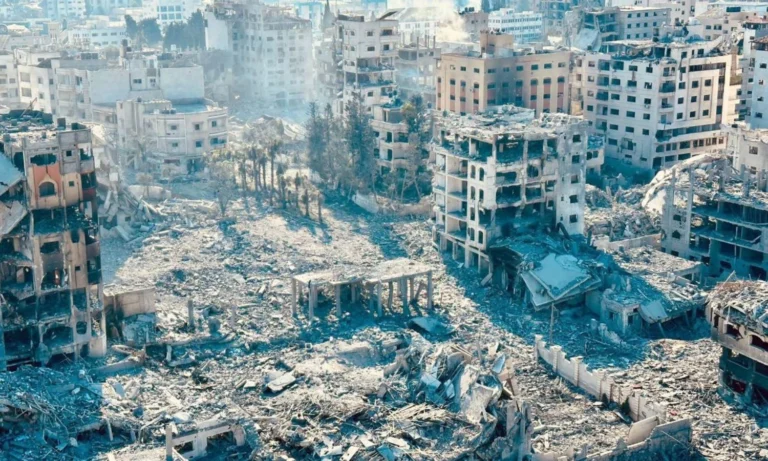
New York, USA – A prominent American businessman has called for a major international initiative to finance the reconstruction of the Gaza Strip, with a budget of up to $150 billion. This proposal has generated considerable interest in political and economic circles. Questions have also arisen regarding funding sources, implementation mechanisms, and the role of the private sector in rebuilding the affected areas.
The businessman explained that the proposed plan relies on a multilateral partnership involving governments, international financial institutions, sovereign wealth funds, and major global corporations. The plan aims to rebuild the devastated infrastructure, revitalize the local economy, and create numerous job opportunities. It also contributes to achieving long-term stability.
He pointed out that the scale of the destruction in the Gaza Strip necessitates an unconventional investment approach. This approach transforms reconstruction into a massive economic project focused on energy, digital infrastructure, and industrial zones. This would allow for the creation of a more sustainable economy, rather than relying solely on humanitarian aid.
Observers believe the proposal reflects a growing trend toward private sector involvement in reconstruction efforts. However, it faces significant political and security challenges, most notably the nature of the sector’s future management and guarantees for investment protection. Questions also arise regarding the possibility of achieving international and regional consensus on implementation mechanisms.
The proposal has also sparked debate about the feasibility of the proposed figure, particularly given past experiences with the reconstruction of conflict zones, which often encounter obstacles related to funding, security, and the legal environment.
This proposal comes at a time when international efforts are intensifying to find “post-conflict” arrangements in Gaza. During this period, political initiatives intersect with major economic projects aimed at reshaping the landscape of the Gaza Strip in the long term.