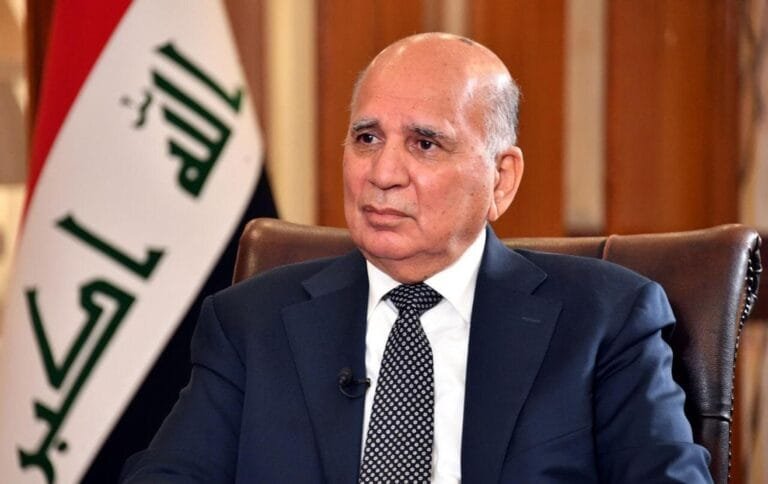
Baghdad, Iraq – Iraqi Foreign Minister Fuad Hussein announced on Friday that approximately 3,000 ISIS detainees have been transferred from Syrian prisons to Iraq so far, confirming that the process is ongoing. Baghdad is also in talks with several countries to repatriate their citizens detained in Syria soon. Speaking on the sidelines of the Munich Security Conference, Hussein said Iraq will need additional financial assistance to manage this influx. He also warned of the recent resurgence of ISIS activity in Syria, which is increasing security risks for the region.
A three-way plan to prevent “the great escape”
The transfer of detainees began in January 2026 as part of a tripartite agreement involving Iraq, the United States (through CENTCOM), and the Syrian Democratic Forces (SDF). This agreement aimed to empty high-risk prisons such as Ghweiran and Ramla in Hasakah, and to protect thousands of detainees from the risk of escape or chaos resulting from the changing battlefields and the Syrian army’s advance. The transferred groups included prominent ISIS leaders and chemical weapons experts. They were subsequently distributed among high-security Iraqi prisons such as al-Hout and Krouber.
Financial burdens and international pressures
Hussein noted that the costs of securing and feeding the detainees are estimated at approximately $25 million annually, calling on the international community to provide financial support. He confirmed that Baghdad is in talks with European, Asian, and Arab countries to repatriate their nationals among the detainees. He also stressed that Iraq cannot remain a “global prison” for foreign members of the organization.
The stance on “Al-Maliki” and the American messages
On the domestic political front, Hussein commented on the news of the reappointment of former Prime Minister Nouri al-Maliki, describing the decision as an “internal matter.” However, he indicated that Baghdad “takes American signals very seriously,” highlighting the importance of maintaining a balance with Washington at this stage.
Legal and security challenges
The Iraqi government, headed by Mohammed Shia al-Sudani, faces human rights criticisms and legal challenges, as gaps in the files of foreign detainees and the issue of their families in al-Hol camp continue to complicate the management of the situation. This operation is the largest security-related repatriation since the defeat of ISIS in Baghouz in 2019. Observers believe that Iraq bears a global security responsibility, which necessitates an international response to its financial and political demands.