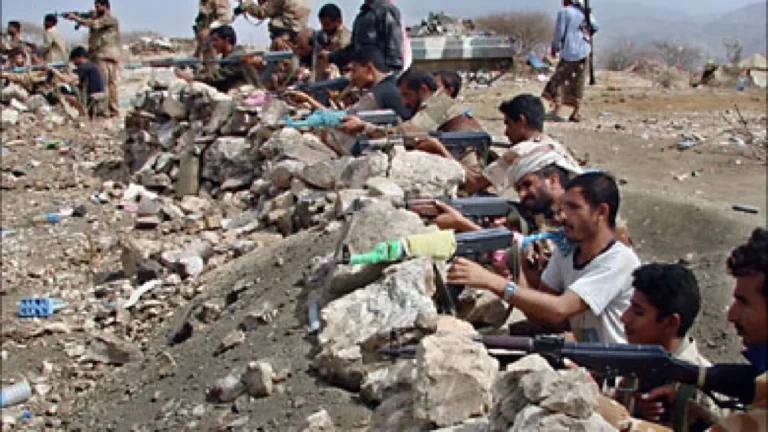
Shabwa, Yemen – The city of Ataq, the administrative capital of Shabwa Governorate in southern Yemen, witnessed a sudden escalation in security following violent armed clashes centered around the governorate building. This resulted in deaths and injuries amidst heightened political tensions in the oil-rich province. A medical source told Aden Independent Channel that the death toll from the shooting had risen to four, with more than 28 injured among civilian protesters, noting that some of the injuries were serious.
According to reports, clashes erupted after supporters of the Southern Transitional Council attempted to storm the local government building. The situation then escalated into armed confrontations. This escalation coincided with protesters removing the Yemeni flag from the government building. This act reflected the culmination of the symbolic and political conflict in the province. The removal of the unity flag came just weeks after it had been raised over several government buildings. This move angered supporters of the southern movement, amidst rising tensions between local factions.
Ataq is experiencing a sharp polarization between pro-government forces, including the “Homeland Shield” forces and security services, and the “Shabwa Defense” factions affiliated with the Southern Transitional Council (STC). This has fueled a fierce power struggle in the governorate in recent months. The past period has also witnessed changes on the ground, including the closure of some STC headquarters and the redeployment of new military forces. STC supporters view these moves as an attempt to diminish their influence in Shabwa in favor of factions backed by regional powers.
Accounts of what transpired are conflicting. Government sources describe the incident as a “failed attempted rebellion and storming” of state institutions. Southern activists, however, view it as a “legitimate popular escalation” against what they describe as foreign interference and attempts to impose a political reality that lacks widespread acceptance in Shabwa. These developments come at a sensitive time for the province, raising concerns about a potential widening of tensions and their impact on security, oil production, and exports in the region.