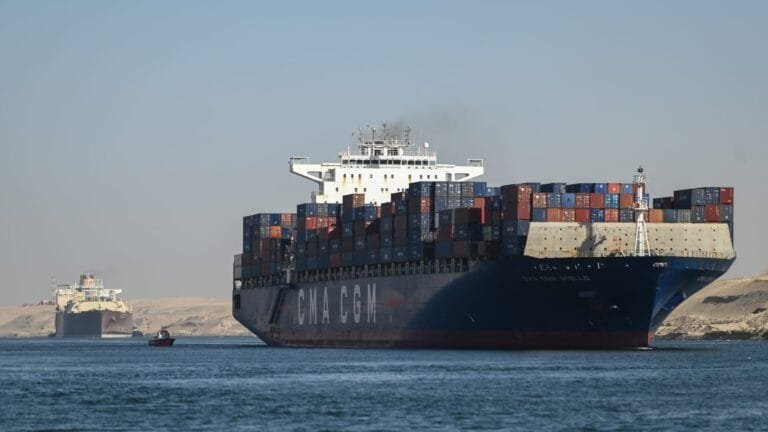
Washington, DC – In a move reflecting heightened security concerns in the world’s most important oil shipping lane, the United States issued new guidelines Monday for commercial vessels transiting the Strait of Hormuz. This comes as diplomatic efforts continue in Oman to revive the nuclear agreement and avert a full-blown confrontation.
American directives: “Do not allow the advance and do not resist with force.”
The U.S. Maritime Administration (MMA), part of the Department of Transportation, advised U.S.-flagged vessels to stay as far away from Iranian territorial waters as possible, without compromising navigational safety. The directive was unequivocal on two points: Refusal of Inspection: The MMA instructed crews to refuse Iranian forces permission to board their vessels if requested in international waters. Avoidance of Force: Should Iranian forces actually board, the directive warned crews against armed resistance to prevent military escalation. These warnings come after a series of incidents in which Tehran seized oil tankers and commercial vessels, citing accusations of “smuggling” or violations of maritime law.
Muscat route: “A good start” despite the tension
In contrast to the tense atmosphere at sea, a cautious optimism prevailed in diplomatic circles. Iran’s top diplomat stated on Friday that the indirect nuclear talks with Washington in Muscat had gotten off to a “good start.” These remarks aimed to reassure global markets and the international community that the region could not descend into a wider war should diplomatic channels fail. Both sides also indicated a shared desire to revive the nuclear agreement. However, Washington insists that negotiations must include Iran’s ballistic missile program, its support for armed groups in the region, and its human rights record.
Analysis: “Diplomacy under the threat of arms”
Observers believe Washington is pursuing a dual policy: while opening channels of dialogue in Oman, it is simultaneously bolstering its security measures in the Strait of Hormuz to ensure that energy supplies are not subject to any political blackmail during this sensitive negotiation period. On the other hand, the Strait of Hormuz is a vital artery for approximately one-fifth of global oil production. Any disruption to shipping through it could lead to historic spikes in energy prices. For this reason, international powers are attempting to avert such a scenario through last-minute negotiations.