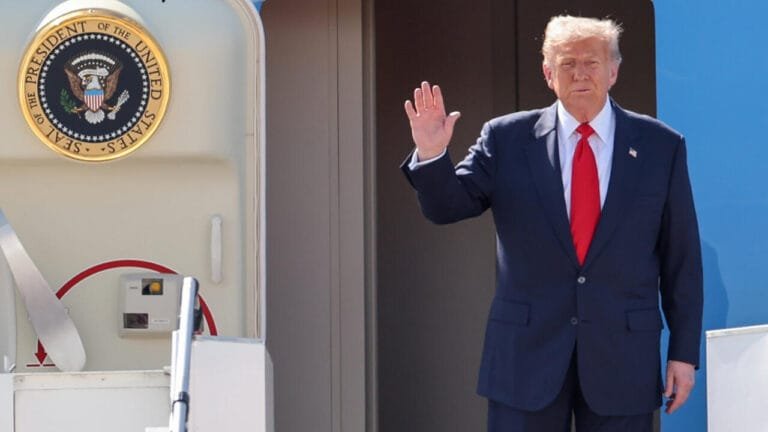
Washington, DC – Today, the eyes of the American public are fixed on the federal courtroom as the verdict is delivered in one of the most serious political and security cases. This follows the conviction of the defendant for attempting to assassinate US President Donald Trump, an incident that has shaken the nation and revived fears of political violence. The incident has also brought to the forefront the blurring lines between political disagreement and anarchy.
The case, which has garnered widespread media attention since its inception, was not treated as a mere criminal incident. Rather, it was considered a direct threat to national security and the symbolic significance of the presidency. Consequently, the prosecution sought the maximum penalty, including life imprisonment without the possibility of parole, arguing that the crime targeted the very heart of the American political system.
During the trial, the prosecution presented what it described as “conclusive” evidence, including recordings, testimonies, and the defendant’s past movements. All of this, they argued, confirmed a premeditated intent to carry out the assassination, rather than a mere impulsive act or momentary lapse in judgment. The defense team, for its part, attempted to mitigate the severity of the charges by focusing on the defendant’s psychological state. Furthermore, he argued that the crime was not actually completed. These arguments did not find much support with the jury.
The American public is divided, not on condemning the act—that’s almost a foregone conclusion—but on the overall significance of the incident. This raises the question: Are we witnessing an isolated incident, or a dangerous indicator of escalating hate speech and political violence? These questions are being asked repeatedly amidst the intense polarization gripping the United States, especially with crucial elections approaching.
Observers believe the anticipated verdict will not merely punish an individual, but will send a clear message of deterrence: targeting political figures is a red line that cannot be crossed. Conversely, others warn that ignoring the roots of political extremism could make such incidents more likely to recur, regardless of the severity of the sentences.
Within the courtroom walls today, it is not just the accused who is being tried. In reality, the American state’s ability to uphold the rule of law and protect the political process from descending into violence is being tested. This comes at a time when weapons are increasingly present in the battles of opinion, even more so than in the arenas of crime.