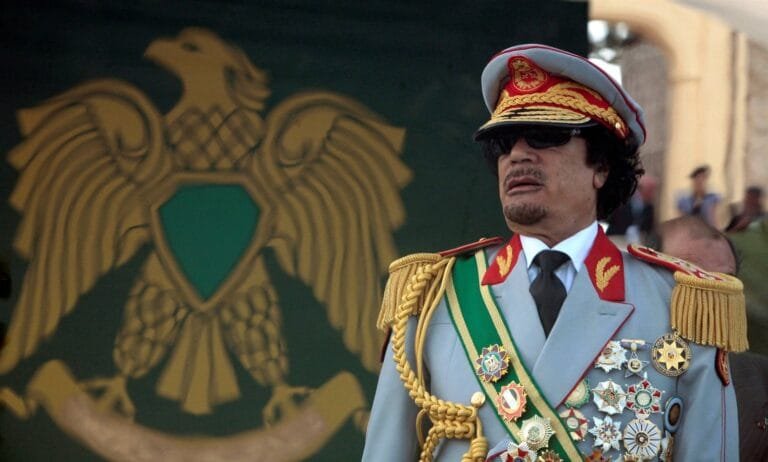
Tripoli, Libya – The Libyan National Popular Movement mourned the passing of the late Libyan leader Muammar Gaddafi, affirming that he was a symbol of national sovereignty and independent decision-making, and that he faced what it described as a “storm of internal and external targeting” until his last breath. He did so in defense of Libya and its unity.
In a statement marked by a striking emotional and political tone, the movement said that Gaddafi represented a pivotal stage in modern Libyan history, and his name was associated with a political project that, according to the statement, sought to place Libya outside the circles of hegemony and dependency. It also indicated that targeting him was not isolated from a broader project targeting the Libyan state and its institutions.
The statement added that what occurred in 2011 was not a “fully-fledged revolution” but rather a gateway to chaos and division. It also considered the absence of the state, the disintegration of institutions, and the proliferation of weapons to be “direct consequences of overthrowing the regime without a comprehensive national alternative.”
The Libyan National Popular Movement affirmed that Gaddafi, despite the controversy surrounding his rule, remained, for a segment of the Libyan population, a voice of independence and rejection of foreign dictates. It noted that re-examining that period has become essential given the country’s current political divisions, armed conflict, and regional and international interventions.
The statement emphasized that commemorating Gaddafi is not driven by nostalgia, but rather by a desire to understand the roots of the Libyan crisis. It further stressed that the solution can only be purely Libyan, based on national reconciliation, the rejection of foreign interference, and the establishment of a unified and sovereign state.
These statements come at a time when the Libyan political landscape is witnessing a resurgence of debate surrounding the pre-2011 legacy. There is also a growing chorus of voices calling for a review of the political path that has led the country to a state of deadlock and ongoing chaos.
The movement concluded its statement by asserting that history, however long it takes, “will inevitably raise these long-postponed questions.” She also stressed that Libya will not recover until it regains its national decision-making power and closes the doors of conflict that have been open for more than a decade.