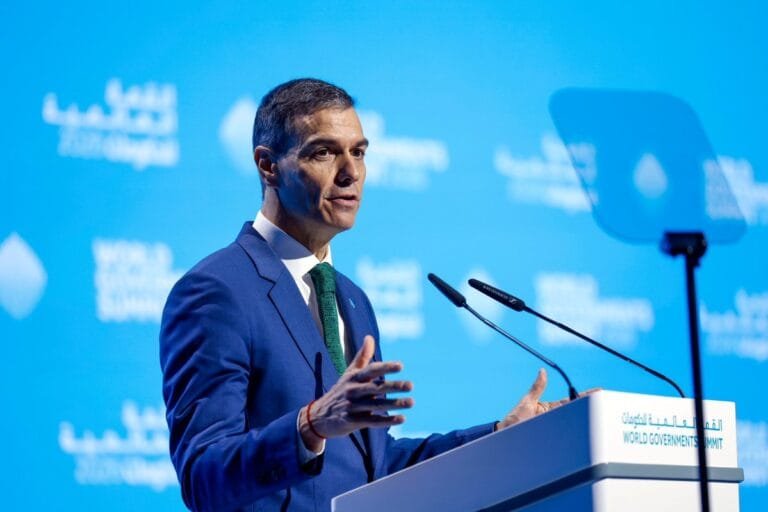
Madrid, Spain – The Spanish Prime Minister’s announcement of a ban on social media use by minors has sparked a political and media storm both within Spain and internationally. The decision has escalated from a controversial legislative move into an open conflict with major figures in the global technology sector, most notably American billionaire Elon Musk.
The Spanish Prime Minister asserted that the decision aims to “protect future generations from increasing psychological and behavioral risks.” He emphasized that social media platforms have become a genuine threat to the mental health of children and adolescents, citing rising rates of depression, cyberbullying, and digital addiction.
He explained that the government is working on strict legislation that will require digital platform companies to implement rigorous age verification mechanisms. He added that substantial fines will be imposed for any violations. He concluded that “digital freedom cannot come at the expense of children’s futures.”
The decision sparked angry reactions, most notably from Elon Musk, owner of the X platform, who described the Spanish Prime Minister as a “tyrant” and a “traitor to his country.” He considered the ban a direct attack on freedom of expression and an opening to comprehensive government censorship of cyberspace.
In a comment that generated widespread discussion, Musk said, “What’s happening in Spain isn’t protecting children, but rather an authoritarian step to control minds and silence voices in the name of morality,” adding that such policies “put Spain on a dangerous path that threatens freedoms.”
In response, Spanish government sources stated that Musk’s remarks constituted “unacceptable interference in internal affairs.” They emphasized that protecting minors is “a red line that is not subject to the machinations of businessmen or the pressures of giant tech companies.”
This controversy comes at a time when Europe is witnessing a heated debate about the future regulation of digital platforms. This debate revolves around growing calls to protect children from the dangers of the virtual world and warnings that strict restrictions could become a tool for curtailing civil liberties.
Between those who see the decision as a bold step to protect future generations and those who consider it the beginning of comprehensive digital surveillance, Spain finds itself at the heart of a new global battle. The crux of this battle is the open conflict between the authority of the state and the influence of tech giants.