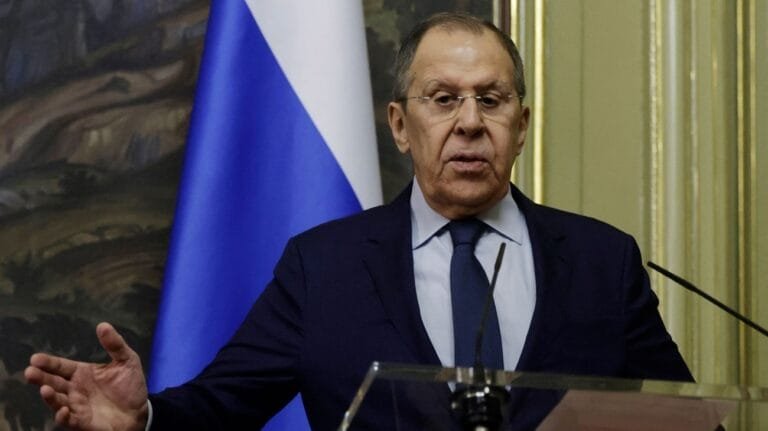
Moscow, Russia – Russian Foreign Minister Sergey Lavrov met with the Secretary General of the Collective Security Treaty Organization (CSTO) to discuss ways to develop and enhance the organization’s effectiveness. This comes amidst Russia’s accelerated efforts to revitalize regional security frameworks in light of escalating international tensions and shifting geopolitical power dynamics.
The Russian Foreign Ministry stated that the meeting addressed prospects for modernizing the organization’s operational mechanisms and raising the level of military and security coordination among member states. This aims to ensure a greater capacity to respond to shared challenges, primarily transnational threats and instability in the organization’s regional periphery.
During the talks, Lavrov emphasized the importance of the CSTO playing a more active role, not only as a defense alliance but also as a political and security coordination platform capable of protecting the interests of its members and addressing rapidly evolving international circumstances, particularly in light of what he termed the “politicization of global security.”
For his part, the Secretary General of the organization stressed the need to develop internal structures, modernize rapid response systems, and enhance joint training exercises to improve the readiness of the organization’s forces and strengthen their deterrence capabilities and ability to maintain regional stability.
These discussions come at a sensitive time, as the Collective Security Treaty Organization (CSTO) faces increasing challenges against the backdrop of regional crises and protracted conflicts, along with escalating Western pressure on member states, which puts its future regional role at risk.
Observers believe that Moscow, through this move, seeks to restore the organization’s credibility as a counterweight to NATO expansion and consolidate its security presence in the post-Soviet space by promoting collective action rather than unilateral actions.
The two sides also discussed mechanisms for strengthening cooperation with other regional and international organizations and intensifying political coordination, which would give the CSTO greater room for maneuver in dealing with pressing issues and bolster its position in the international security equation. Between calls for development and the demands of the complex security reality, the Collective Security Treaty Organization appears to be entering a phase of redefining its role, at a time when Russia is betting on activating its traditional alliances as one of the keys to resilience in a world that is heading towards greater polarization.