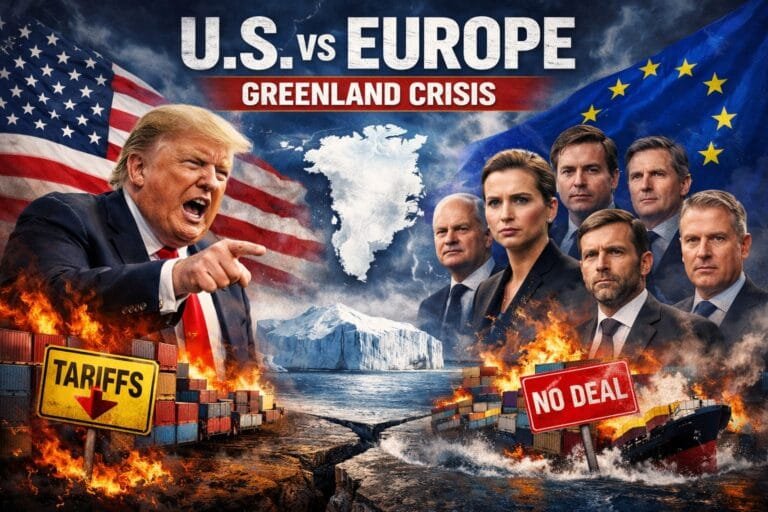
Europe – Several major European Union countries condemned US President Donald Trump’s threats on Sunday to impose additional tariffs on European nations. These countries considered the threats an attempt at economic blackmail, amid escalating tensions over the future of Greenland, a territory belonging to Denmark.
The US threats came after Trump announced on Saturday his intention to impose tariffs on the EU member states of Denmark, Sweden, France, Germany, the Netherlands, and Finland, as well as the UK and Norway, if they do not allow the United States to purchase Greenland. It is estimated that these eight countries were already subject to tariffs ranging from 10 to 15 percent.
A joint statement from eight European countries said that the tariff threats jeopardize transatlantic relations and risk a serious deterioration. The statement also emphasized that Danish military exercises in the region aim to enhance Arctic security and pose no threat to any party. It added that the countries are ready to engage in dialogue based on sovereignty and territorial integrity.
Danish Prime Minister Mette Frederiksen expressed her satisfaction with the unified European position. She affirmed that “Europe will not succumb to blackmail,” a stance echoed by the German Finance Minister and the Swedish Prime Minister. Dutch Foreign Minister David van Welhät described Trump’s threats as blatant “blackmail.”
In a coordinated response, Cyprus, which holds the rotating presidency of the European Union, summoned ambassadors from member states to an emergency meeting in Brussels on Sunday. This came as EU leaders held intensive consultations on next steps.
A source close to French President Emmanuel Macron indicated his intention to activate countermeasures, such as restricting access to US public tenders, investments, and digital services. This falls under the EU’s so-called “anti-coercion instrument,” designed to protect the EU’s interests. Meanwhile, Italy and Britain called for dialogue to avoid escalation.
The EU-US tension comes as the European Parliament questions the fate of existing trade agreements with the United States and anticipates the suspension of trade negotiations if the tariff threats persist.