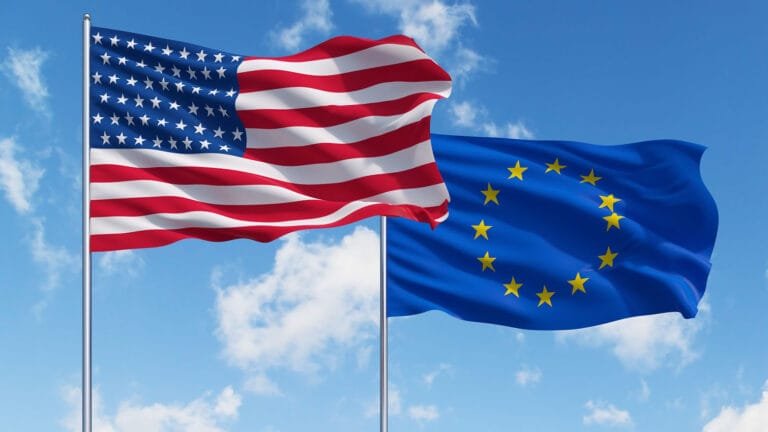
Brussels, Belgium – The European Union has decided not to activate its anti-coercive mechanism in response to threats made by US President Donald Trump, a move reflecting Brussels’ desire to avoid a direct trade escalation with Washington at this sensitive juncture in transatlantic relations.
European officials confirmed that the decision followed extensive consultations among member states, with the majority of capitals believing that resorting to this mechanism – one of the EU’s most powerful tools for responding to external economic and political pressures – could lead to an open trade war with the United States, harming the European economy.
The EU’s anti-coercive mechanism allows it to impose countermeasures, including tariffs, investment restrictions, and limitations on market access, if a member state or the EU as a whole is subjected to economic pressure or threats from an external party.
Despite the decision not to activate it at present, Brussels emphasized that the mechanism remains in place and ready for use should the US threats escalate into concrete actions that harm European interests, asserting that the EU “will not hesitate to defend its economic sovereignty.”
This stance comes amid escalating rhetoric from Trump regarding imposing new restrictions and tariffs on trading partners, raising concerns within the EU about a return to protectionist economic policies that could reignite tensions in EU-US relations.