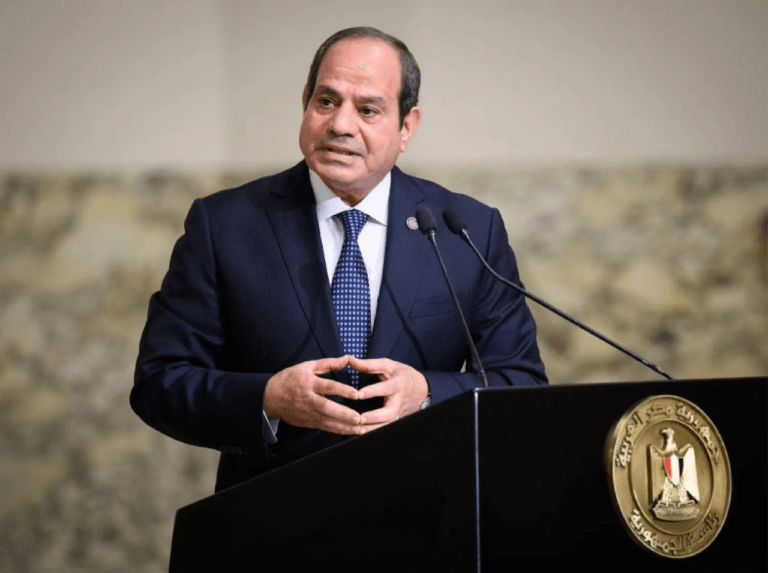
Cairo, Egypt – Egyptian President Abdel Fattah al-Sisi met on Sunday with Lieutenant General Osama Rabie, Chairman of the Suez Canal Authority,
to discuss international shipping traffic through the canal and updates on infrastructure development projects and the localization of maritime industries.
These initiatives are part of the state’s strategy to enhance maritime security and the competitiveness of the waterway. During the meeting,
Lieutenant General Rabie presented a report indicating a gradual recovery in shipping traffic during the second half of 2025,
with the canal witnessing a gradual increase in the transit of giant container ships.
This reflects the improved security situation in the Red Sea region. Development projects in the southern sector have also contributed to enhancing the canal’s competitiveness.
Upgrading the Egyptian fishing fleet
The report anticipates continued revenue improvement during the second half of 2026, with shipping lines expected to return to their normal levels by the end of the year.
President El-Sisi also followed up on efforts to localize the maritime industry and develop the Egyptian fleet as part of a strategy to enhance reliance on local production.
The Chairman of the Suez Canal Authority explained the latest developments regarding the construction of 12 deep-sea fishing vessels to modernize the Egyptian fishing fleet.
The construction of six “Azm” class tugboats with a bollard pull of 90 tons has also been completed. Work continues on 10 other tugboats with a bollard pull of 80 tons.
In addition, the construction of 10 river buses has been completed.
There are also plans to develop the dredging fleet to enhance the efficiency of dredging and deepening operations.
Waterway development
President El-Sisi directed the continuation of the strategy to develop the Suez Canal waterway
and all its facilities, emphasizing the importance of meeting the needs of Egyptian ports for locally manufactured marine units and tugboats.
He also stressed the need to enhance the canal’s ability to maintain its prominent global position in international trade.
Furthermore, he emphasized the necessity of modernizing the fishing fleet to bolster food security and increase marine productivity.
These directives reflect the Egyptian leadership’s commitment to supporting the maritime transport sector
and localizing the maritime industry to ensure sustainable economic growth and strengthen Egypt’s position as a global logistics hub.