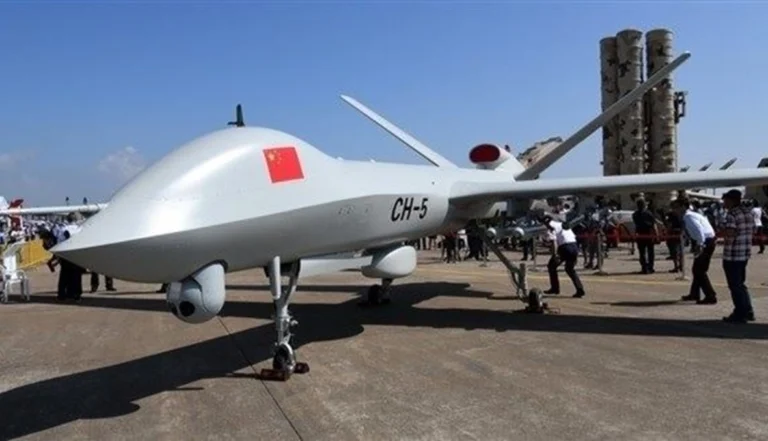
Beijing, China – China on Saturday passed a revised law formally regulating drone flights for the first time. This strategic move aims to close regulatory gaps and support the country’s rapidly growing “low-altitude economy.”
Legislative amendments to bridge gaps
The Standing Committee of the National People’s Congress of China approved amendments to the Civil Aviation Law. The committee added a key provision concerning the “Certification of Airworthiness for Unmanned Aerial Vehicles.” Under the new rules, which will take effect on July 1, 2026:
All entities engaged in the design, production, import, maintenance, and operation of unmanned aerial vehicles must obtain official airworthiness certificates.
This permanent operation comes to replace the “temporary regulations” that were implemented in 2024 and required registration with real names only.
Two trillion yuan: Promising economic prospects
This move comes as Beijing prioritizes the “low-altitude economy” (commercial air activities below 3,000 meters). Estimates from the Chinese Academy of Sciences and the Civil Aviation Administration show ambitious economic projections:
2025: The sector is expected to reach 1.5 trillion yuan.
2030: The target is to exceed 2 trillion yuan (approximately $280 billion).
Logistics: The main engine
Drones have become a key component of China’s logistics sector; data from the Ministry of Transport revealed that 2.7 million parcels were delivered via drones during 2024. These included a variety of shipments ranging from fast food to life-saving medicines.
Motives for strict organization
The new law aims to address the chaos caused by the market’s rapid and unregulated expansion. Recent years have seen delays in commercial flights due to illegal overflights.
There is also an urgent need to impose penalties and fines to enforce air safety in major cities. Regulatory discrimination persists; very small and light aircraft remain exempt from certification, while medium and large aircraft are required to submit formal applications to the Civil Aviation Authority.