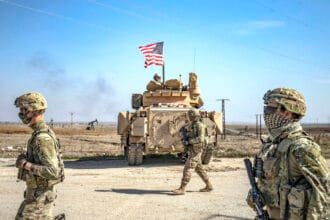
Damascus, Syria – Early Saturday morning, the US military launched a large-scale military operation dubbed “Hawkeye Strike.” The operation targeted dozens of ISIS positions in various areas of central Syria.
“Huge” strikes for several hours
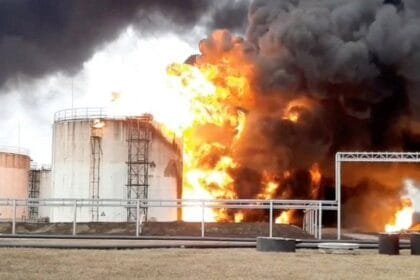
The New York Times quoted US officials describing the attack as “massive.” It involved fighter jets, attack helicopters, and heavy artillery. The strikes targeted weapons depots, logistics buildings, and ISIS strongholds. The operation lasted for several hours until dawn on Saturday, with the sound of explosions shaking large swaths of the country.
Hegseth: “A declaration of revenge,” not the start of a war.
In an official announcement via the “X” platform, US Defense Secretary Pete Hegseth confirmed the start of the operation, emphasizing that it was a direct response to the Palmyra attack that killed two American soldiers last Saturday.
Hegseth said in a firm message
“This is not the beginning of a war, but a declaration of revenge. The United States, under the leadership of President Trump, will not hesitate to defend our people. Anyone who targets Americans will spend the rest of their short life knowing that we will hunt them down and kill them without mercy.”
Behind the scenes of the Palmyra attack
These strikes come in fulfillment of President Donald Trump’s promise to retaliate for the killing of two Iowa National Guard soldiers and an American civilian translator in a well-planned ambush in Palmyra. Sources revealed that the attacker was a member of the Syrian security forces who was scheduled for dismissal due to his extremist views. He opened fire on the American force before being neutralized.
Intelligence effort and allied cooperation
Officials indicated that Operation Falcon Eye was not a spur-of-the-moment decision, but rather based on intelligence gathered from 10 previous attacks conducted by allied forces in Syria and Iraq following the Palmyra incident, as well as some 80 preemptive operations carried out since last July to undermine the organization’s capabilities.
Fears of a resurgence of ISIS
This operation comes at a sensitive time, as senior US intelligence officials have warned of ISIS attempts to exploit the political shifts in Syria. The group is seeking to free thousands of fighters and their families held captive in the northeast. Despite losing its territorial control, the New York Times report confirmed that the group remains a threat through sleeper cells that have recently claimed responsibility for deadly attacks in Iran, Russia, and Pakistan.
With this operation, the Trump administration seeks to send a strong deterrent message. The administration affirms its continued pursuit of the remnants of the organization to ensure it does not revive its offensive capabilities.